He looked at her like he’d known her for thirty years. She had never seen him before in her life.
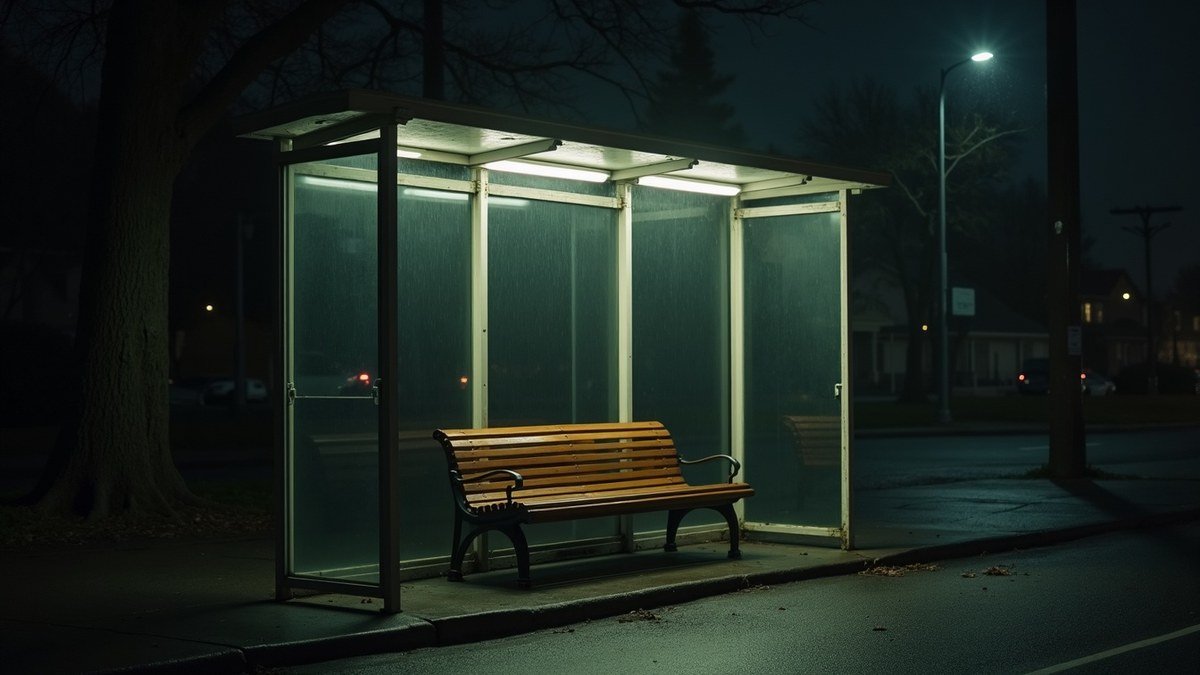
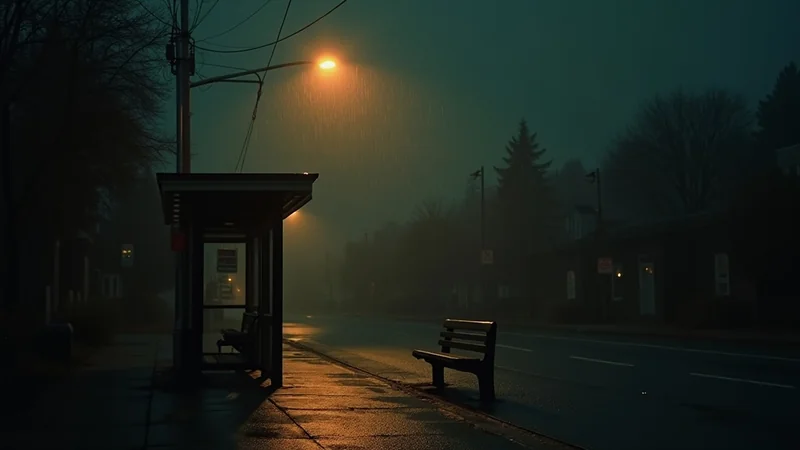
The number fourteen bus stop at the corner of Northwest Twenty-Third Avenue and Lovejoy Street in Portland is the kind of small urban stop that handles the slow rhythm of a residential neighborhood without ever quite becoming a meaningful piece of anyone’s day. Two narrow metal benches under a glass shelter. A small printed schedule that nobody reads because the app is better. A view, looking west, of the small careful nineteenth-century houses that climb the hill toward the West End. Sarah Whitestone had been catching the number fourteen at that stop, on Tuesday mornings at seven-eighteen, for almost six years.
She was thirty-six. She worked as a curator at a small private gallery on Burnside that specialized in twentieth-century Pacific Northwest printmaking. She had a small one-bedroom apartment four blocks from the bus stop, a rescue terrier named Booker, and the kind of careful disciplined morning routine that single women in their thirties in Portland sometimes develop as a quiet act of resistance against the soft formless weather of the city’s wet half of the year.
On the Tuesday in question, in early October, the weather had not yet turned. The morning was crisp, dry, and the kind of pale grey that Portland sometimes manages between September and early November before the long rain settles in. She had walked the four blocks from her apartment with her travel mug of coffee in one hand and her canvas tote in the other. She had arrived at the bus stop at seven-fourteen. She had sat on the bench. She had taken out her phone.
The man arrived at seven-sixteen.
He was in his mid-sixties. He was tall, slightly stooped, wearing a soft brown corduroy jacket over a flannel shirt and a pair of dark wool trousers that looked, even at a glance, expensive. He had a small leather satchel over one shoulder. He had the particular weathered handsomeness of a man who had spent a great deal of his life outdoors but who had also, by the look of him, recently begun to spend more of it indoors.
He sat down on the bench beside her. There was room for three more people between them.
He turned his head. He looked at her. He smiled. It was not the small distracted smile of a stranger at a bus stop. It was the warm full smile of a person greeting someone he had been hoping, for a long time, to run into.
“Sarah,” he said.
II. The conversation.
She looked at him.
She did not, in the first moment, place him. She had developed, over twenty years of curatorial work, a careful professional memory for faces (she could, on a good day, recognize an artist she had met once at a gallery opening in 2013) and this face did not, by any of her usual search criteria, return a match. The voice was warm. The face was kind. The greeting was familiar. None of these, alone or together, helped her place him.
“I am sorry,” she said. “I do not, I am sorry. Have we met?”
The man looked at her for a long moment. The smile did not, in that moment, change. It softened, slightly, into something more careful.
“I am so sorry,” he said. “You look very much like a Sarah I used to know.”
“That is alright.”
“No, please. I apologize. That was, I should have been more careful. I am sorry.”
She nodded. She turned back to her phone. The bus was still four minutes away.
But the man did not, in the way one might expect, turn away. He looked at her once more. He looked away. He looked back. He had, in the small particular set of micro-expressions that careful older men sometimes have, the look of a person who was trying to decide whether to say something more.
“Could I ask you something?” he said.
“Yes.”
“Your last name. Is it Whitestone?”
She had not, in the conversation up to that point, told him her last name. She had not, in any visible way, identified herself. Her tote bag had no monogram. Her phone case had no initials. Her travel mug was a small plain ceramic one she had bought at Powell’s three years earlier, with no markings of any kind.
She set her phone down on the bench beside her.
“Yes,” she said. “How did you know that?”
III. The man at the bus stop.
His name, he told her, was Edward Maris. He was sixty-six. He had lived in Portland since 1981. He had spent most of his career as a research scientist at the small marine biology institute up near the Oregon coast, in a long quiet professional life that had been marked by the gradual specialization in a small careful corner of his field that had ended, by 2018, with his promotion to a small directorship and his slow transition into the careful semi-retirement he was now living.
He was, by his own careful account, married, with two grown daughters in their early thirties. His wife was a high school chemistry teacher. They lived in a small craftsman house in the Northwest District, eleven blocks from the bus stop where they were sitting.
He had not, before that Tuesday morning, ever spoken to Sarah.
He had, by his own quiet admission, seen her at the same bus stop on Tuesday mornings at seven-eighteen for almost five years.
She did not, in the moment, know what to make of this. The information was, on its face, slightly unsettling. A man she did not know had been observing her at a bus stop, on the same morning of the week, for half a decade. The information, by itself, was the kind of information that women at bus stops in American cities have, over the long careful course of their lives, learned to react to with caution.
But Edward Maris was not, by any visible sign, presenting himself in a way that asked for caution. He was sitting at the other end of the bench. He was looking at the ground in front of him, not at her. His hands were folded carefully in his lap. He had the small careful weather of a man who had been thinking about something for a long time and who was, on a Tuesday morning in October, trying to decide whether to mention it.
“Mr. Maris,” she said carefully. “Could you tell me how you know my name?”
He looked up. He looked at her. He took a small breath.
“I grew up in a house,” he said, “in a small town in northern Vermont called Cabot. My father was a dairy farmer. We had a neighbor named John Whitestone. He was a small dairy farmer too, but a smaller operation. His wife was named Margaret. They had a daughter. The daughter’s name was Sarah.”
He paused.
“You look exactly like her.”
IV. The Sarah of Cabot, Vermont.
The Sarah Whitestone whom Edward Maris had grown up next door to in northern Vermont in the late nineteen-fifties and early nineteen-sixties had been, by his careful account, the closest friend he had ever had in his childhood. They had been within a year of each other in age, Edward had been born in 1959, Sarah in 1960. They had walked to the small two-room schoolhouse together every morning from the age of six until the age of eleven. They had built a small careful tree house, by careful joint engineering, in the maple at the corner of his father’s pasture in the summer of 1968.
Sarah Whitestone of Cabot, Vermont, had died in February of 1971, at the age of ten, of complications from a sudden onset of pediatric leukemia.
She had been Edward Maris’s first experience of grief.
He had not, in the fifty-four years since, ever fully recovered from it.
He had not, in those fifty-four years, ever encountered another Sarah Whitestone. He had not, in any sense, expected to. The name was uncommon. The combination was uncommon. He had moved away from Vermont in 1978 for college, and then to graduate school in California, and then to Portland in 1981, and he had built, in those forty-four subsequent years, the careful productive life of a marine biologist whose childhood grief had quietly settled into a small permanent feature of his interior weather.
He had first noticed Sarah at the bus stop in the fall of 2019. He had been walking past on his way to the small coffee shop two blocks east, where he stopped most Tuesday mornings on his way to a long-standing small breakfast meeting with a retired colleague. He had glanced at the bus stop. He had seen a woman in her early thirties sitting on the bench. The resemblance had stopped him on the sidewalk.
He had not, in 2019, said anything. He had not, in the subsequent five years, said anything. He had simply, every Tuesday morning, walked past the bus stop at seven-sixteen on his way to his small breakfast meeting, and he had glanced (sometimes for a fraction of a second, sometimes for a longer pause) at the woman on the bench. He had developed, in the way that lonely older men sometimes develop these things, a small careful private ritual around it.
He had learned her name three years earlier, by accident, when she had been on the phone with the gallery and had identified herself in the long businesslike way that curators identify themselves on the phone. He had been, that morning, sitting on the same bench because the coffee shop had been closed for renovation. He had not eavesdropped. The bench had been quiet. He had heard.
He had not, in three years, used the name.
He had used it that morning, he told her carefully, because his wife had received, the previous week, a diagnosis. He did not, in our conversation later, tell me the specifics. He told Sarah, that morning, only that his wife was unwell, that his daughters were preparing for a hard year, and that he himself had begun, in the slow careful way that older men sometimes do under the weight of approaching loss, to take small inventories of the unspoken pieces of his own life.
He had decided, on the Tuesday morning in question, that he was going to say the name out loud. Just once. He had wanted, by his own careful private description, to see what the air did with it.
V. What Sarah did.
The hardest moments in a stranger’s day are the moments when a stranger’s grief, briefly visible, asks something gentle of you that nobody had warned you to be ready for.
She sat with him on the bench for a long moment. The bus was a minute away. She did not, in that minute, do any of the things a less careful woman might have done. She did not stand. She did not move away. She did not, in any way, treat the man as a threat. She had been working in the small careful world of Pacific Northwest printmaking for fourteen years. She had spent a great deal of her professional life talking with the careful older keepers of modest, deliberate collections, and she had learned, in those fourteen years, what the small particular weather of an older man’s careful grief looked like.
Edward Maris was, by every visible sign, simply grieving.
“Mr. Maris,” she said. “I am sorry about your wife.”
“Thank you, Sarah.”
“I am sorry, also, about your friend.”
He looked at her. The careful kindness of his face did not change. He simply held her eyes for a moment.
“Thank you,” he said. “I do not, I do not, in the way of these things, often have the chance to say her name. I appreciated being able to say it.”
The bus pulled up. She stood. She picked up her tote. She held out her hand.
“It is nice to meet you, Edward,” she said.
He stood. He shook her hand carefully.
“It is very nice to meet you, Sarah.”
She got on the bus. She sat in her usual seat near the back. She watched, through the rain-spotted window, as Edward Maris walked away down Northwest Twenty-Third toward his small breakfast meeting. He did not, by any visible sign, turn around.
VI. The Tuesdays after.
She did not, in the weeks afterward, do anything dramatic about the conversation. She did not, in the careful way some women might have, look him up. She did not search his wife’s name. She did not, in any way, treat the conversation as the opening of a relationship.
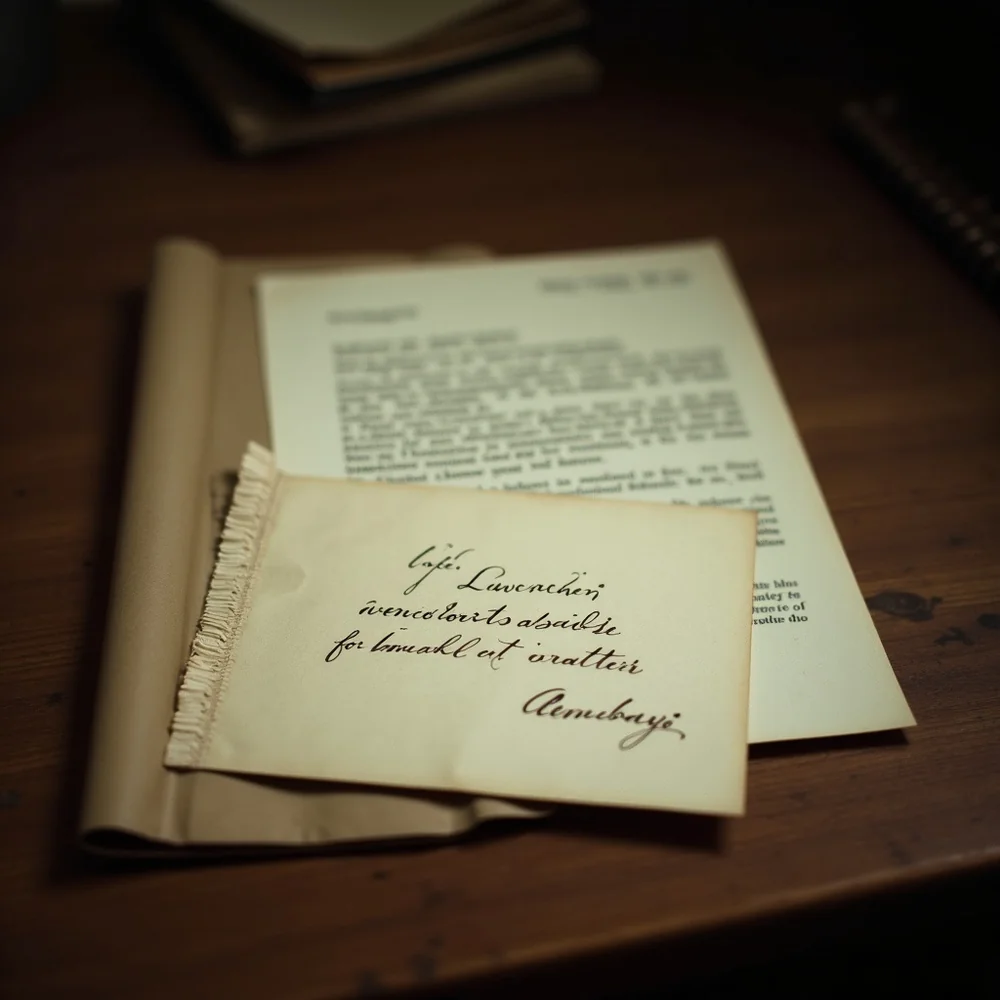
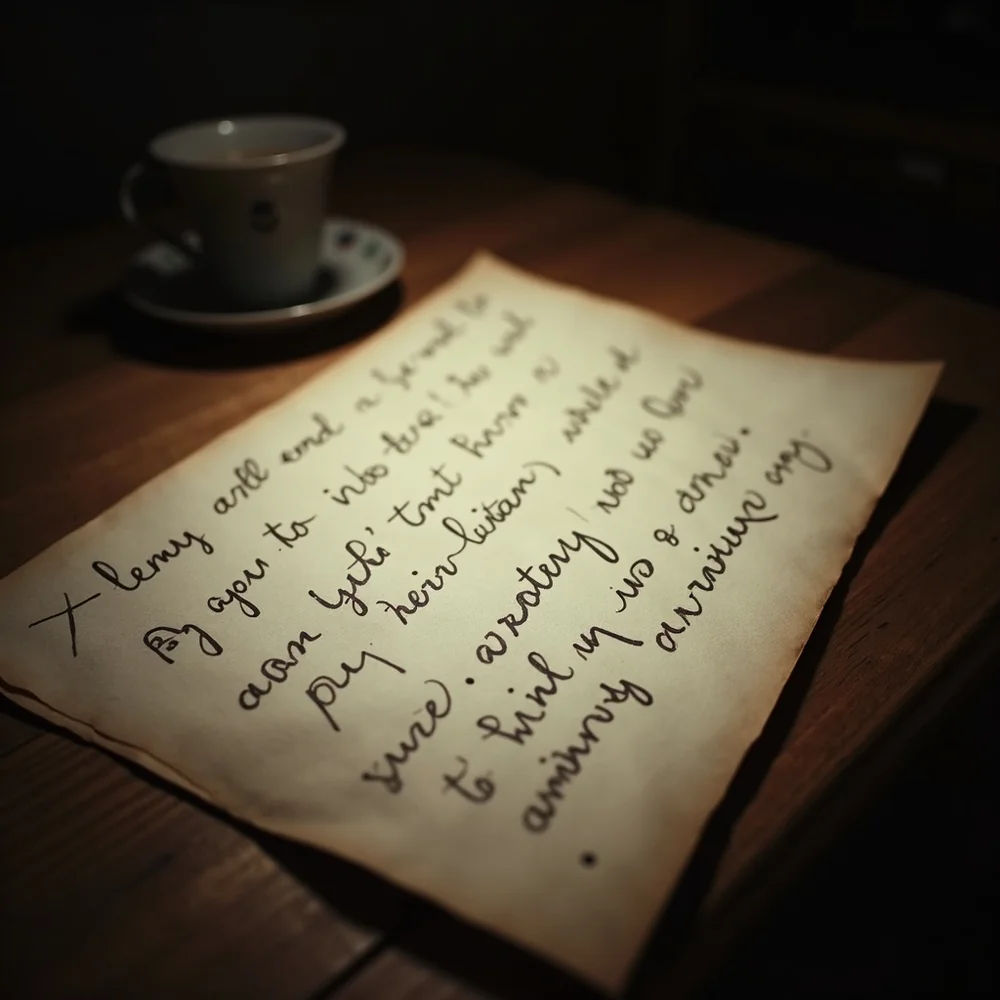
She did, on the second Tuesday after the conversation, bring a small folded piece of paper with her to the bus stop. She had written, on the paper, a quiet, unhurried handwritten note. The note said:
Mr. Maris. I have been thinking, since we spoke, about your friend Sarah. I do not, of course, know what she was like. But I have been a neat, patient curator of small deliberate collections of regional art for fourteen years, and I have learned, in those years, that the names of the people we have loved are worth saying out loud whenever the air seems willing to hold them. I am sorry if it has been a hard week. Please feel free to walk past the bus stop on Tuesday mornings at seven-sixteen for as long as you would like. I am, in case you were wondering, glad to know you are there., S.W.
She did not, that Tuesday, give it to him in person. She left it folded under a small smooth river stone she had brought from her apartment, on the bench where he had sat three weeks earlier. She got on the bus. She rode to work.
She did not know whether he had found it. She did not, in any way, follow up. She had learned, in her fourteen years of curatorial work, that the modest, attentive gestures one makes for the older keepers of quiet, exacting griefs are best left unanchored.
VII. The painting.
I sat with Sarah at the small gallery on Burnside in March, almost five months after the Tuesday morning at the bus stop. She was, at the time, hanging a new small show (a careful selection of small Northwest prints from a private collection in Astoria that had recently come on the market. She was working, when I arrived, in the way curators work in the slow morning hours before opening) alone, in the careful quiet of a gallery without visitors.
She told me what had happened next.
In late January, a small unmarked package had been left at the small front desk of the gallery. The package had contained a single small framed painting, perhaps the size of a paperback novel, wrapped carefully in archival tissue. There had been no name on the package, and no return address.
The painting was a small unhurried watercolor of a tree house. It was an amateur painting, the careful kind that older men sometimes paint as a private hobby in the slow years of careful semi-retirement. The technique was earnest, the colors were soft, the perspective was slightly imperfect. The painting showed a small wooden tree house in a large maple tree at the corner of a green pasture. The summer light was coming in through the leaves.
There was, on the back of the painting, a plain, watchful handwritten note in blue ink. The note said only:
This is the tree house, in 1968. Margaret found your note. She wanted you to have something from us. She did not, in the end, have the kind of year we had been told to prepare for. She is, this winter, doing well. Thank you for the modest, deliberate kindness of a Tuesday morning., E.M.
Sarah hung the painting in her small office at the back of the gallery. It was, the morning I sat with her, still hanging there, in a quiet, unhurried spot above her desk where she could see it when she looked up from her work.
She did not, she told me, know whether Edward Maris’s wife had recovered fully or whether the careful note simply meant that the immediate crisis had passed. She had not, in any way, followed up. She did not, in her professional life, treat the painting as a curatorial object. She treated it as a small private piece of correspondence between herself and an older man who had walked past a bus stop on Tuesday mornings for almost five years.
She had also begun, by the end of January, to notice that Edward Maris no longer walked past the bus stop at seven-sixteen on Tuesday mornings.
She did not know whether this was a coincidence or a small private choice on his part. She suspected, she told me, that it was the latter. The note had, by her own careful private reading, been a way of telling her that he was, in his own quiet way, releasing the bus stop back to her.
She had not, in any way, missed him. She had also not, in any way, forgotten him. The Tuesday morning bus stop had become, by her own careful private description, a small place in her week where she sat for two careful minutes and thought, briefly, about a child named Sarah Whitestone who had died in Cabot, Vermont, in February of 1971, and who had been, fifty-four years later, briefly recognized in the careful weather of a Portland bus stop in October.
VIII. Why it stays.
I have been writing for The Chapbook for almost nine years, and the stories I have come to write most carefully are the stories in which the small inexplicable encounters of strangers at American bus stops turn out to be, on closer inspection, the careful slow returning of a name. Edward Maris had been carrying the name of his childhood friend for fifty-four years. He had carried it through college, through graduate school, through a marriage, through the careful slow rearing of two daughters, through the careful slow building of a small professional life. He had not, in those fifty-four years, said the name out loud to anyone who did not already know the careful private weight it carried.
The name had needed, by the careful slow long arithmetic of grief, to be said.
It had been said, on a Tuesday morning in October, at a bus stop in Portland, to a woman who happened to share it and who happened to be, by the neat, patient weather of her own professional life, the kind of woman who knew how to hear it.
Across the United States, in small bus stops and small benches and small deliberate corners of modest, attentive American cities, the long unspoken names of childhood friends and old loves and the quiet, exacting losses of distant decades are quietly waiting to be said. They are waiting, mostly, for the kind of careful listener who will not panic when she hears them. For broader context on the long quiet American tradition of grief and the small unhurried work of carrying it well, readers can spend time with the long-form material at the Library of Congress or the careful reporting at PBS NewsHour. The Chapbook keeps its narratives clean, human, and responsible, read more in the Editorial Policy.
The small painting of the tree house is still in Sarah’s office at the gallery on Burnside. The number fourteen bus still arrives at the corner of Northwest Twenty-Third and Lovejoy at seven-eighteen on Tuesday mornings. Sarah still catches it.
The bench, for two minutes each week, is still hers.
Edward Maris is, by Sarah’s quiet private knowledge, still walking past the bus stop on Tuesday mornings, but he is now walking on the other side of the street, where she cannot see him. He is, in the plain, watchful way that older Portland men sometimes do, taking the slightly longer route to his small breakfast meeting.
He is, she told me near the end of our conversation, exactly where he ought to be.