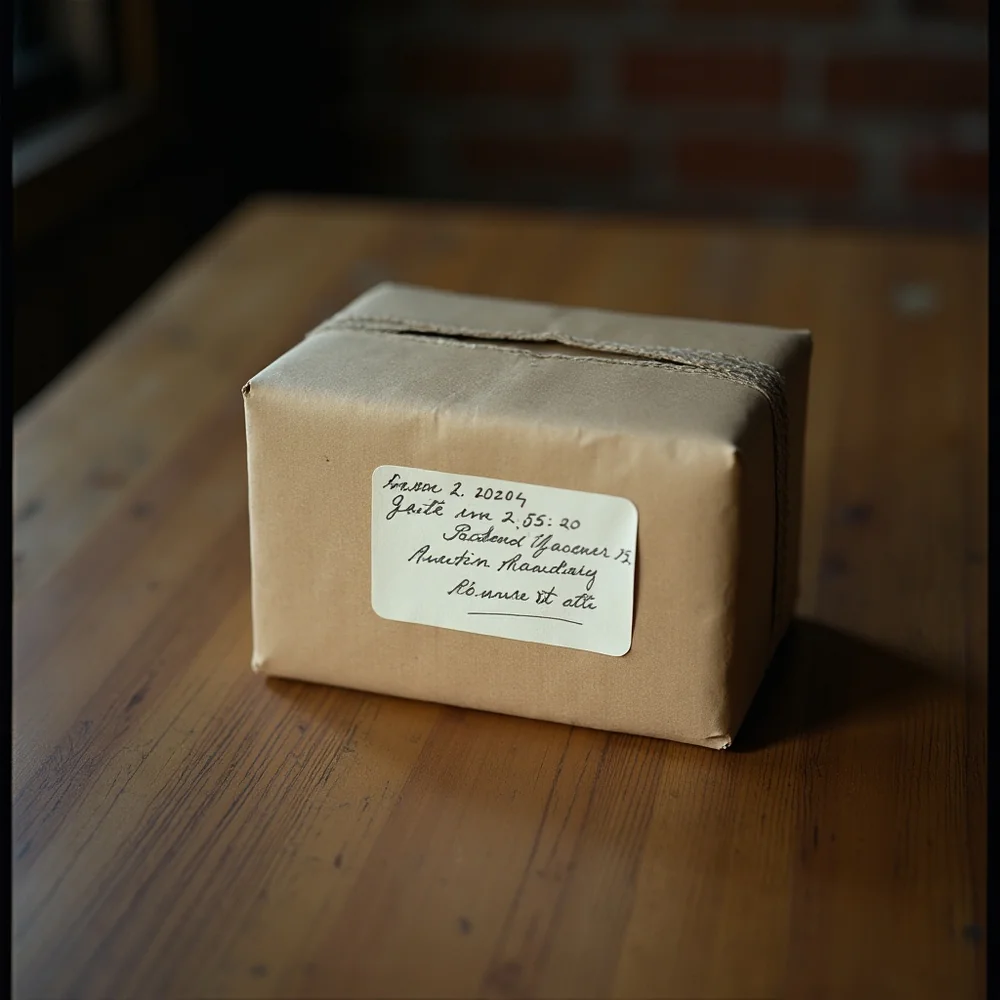
The postmark was 1994. The envelope was addressed to a woman who had been waiting for an answer her whole life.
The Camden post office on Mountain Street is the kind of small New England post office that the United States Postal Service has been quietly closing in towns like this one for the better part of a generation. Brass mail slots. A wooden counter worn smooth by sixty years of forearms. A single clerk on duty most weekday mornings, usually a woman named Linda Roy, who had been working the counter since 1998 and who knew, in the small particular way that small-town postal clerks know, exactly which boxes belonged to which families and which families had been receiving fewer letters than they once had.
It was Linda who found the envelope.
She found it on a Wednesday morning in late April, in the back of the dead-letter drawer, which had not been properly sorted since the previous postmaster had retired in 2019. The dead-letter drawer was a small wooden cabinet in the back room where letters that could not be delivered (bad addresses, dissolved households, returned-to-sender envelopes that had no sender to return to) accumulated until somebody had the patience to deal with them. Linda had decided, on the Wednesday in question, to deal with them.
The envelope was yellowed but intact. The address on the front was written in a small slanted hand in blue ballpoint. The postmark, faded but legible, read August 14, 1994 · Bangor ME. The addressee was a woman named Helen Sutherland, at an address on Limerock Street that Linda recognized immediately, because Helen Sutherland still lived there, and had been picking up her mail at the Camden post office for thirty-one years.
Linda sat down on the small wooden stool in the back room and turned the envelope over in her hands. There was no return address. The flap was sealed. The envelope had, by the look of it, been in the dead-letter drawer for the entire thirty-one years since it had been postmarked.
She did not, in the moment, open it. She put it in a manila folder. She walked it, on her lunch break, two blocks down Mountain Street to the small white house on Limerock where Helen Sutherland lived.
II. Helen.
Helen Sutherland was seventy-eight. She had been widowed in 2017. She had three grown children scattered across the eastern seaboard, and a small kitchen that faced east toward the harbor, and a careful daily routine that had not, since her husband Walter’s passing, included very many surprises.
She opened the door to Linda with the small puzzled smile of an older woman who was not expecting visitors.
“Linda,” she said. “Did I forget to pick up the mail?”
“No, ma’am,” Linda said. “You have not. But I have something for you. Something that was sent to you a long time ago.”
She handed her the manila folder.
Helen took it. She opened it on the kitchen table. She picked up the envelope. She held it close to her face. She did not, Linda told me later, react in any visible way for several seconds. She looked at the postmark. She looked at the handwriting. She looked at her own name on the front.
Then she sat down, very slowly, in the kitchen chair behind her. She set the envelope on the table. She put her hand flat over her mouth.
“Oh,” she said.
III. James Cobb.
The handwriting on the front of the envelope belonged to a man named James Cobb. James Cobb had been Helen’s first serious boyfriend, from the summer of 1965, when she had been seventeen and he had been nineteen and they had both been working at the same family-owned ice cream stand on the coast road outside of Camden. He had gone away to college that fall, to the University of Maine in Orono, and she had stayed in Camden to finish her senior year of high school, and they had written letters back and forth all winter and into the spring.
In the summer of 1966, James had announced, in a careful evening conversation on the rocks behind the ice cream stand, that he had enlisted in the Navy. The Vietnam War was, by then, a thing he could no longer wait out. He shipped out in October. He served three years. He came back to Maine in the spring of 1969, briefly. He and Helen had a careful awkward conversation in a diner on Route 1 that neither of them, in the years afterward, had ever properly described. He moved to California in the summer. He did not come back.
Helen married Walter Sutherland in 1972. She had three children. She had a long careful life. She did not, by her own account, think about James Cobb more than perhaps four or five times a year, at his birthday in October, on Veterans Day, sometimes in the soft fall evenings when the light on the harbor reminded her of the summer of 1965.
In 1994, she had heard, through her younger sister who still lived in Orono, that James Cobb had died of a heart attack in San Diego at the age of forty-eight.
The envelope on the kitchen table was postmarked seven months before that death.
IV. The letter.
She did not open it that afternoon. She sat with it on the kitchen table for almost three hours. She made Linda a cup of tea. She made herself a cup of tea. She walked Linda back to the door at three-thirty and thanked her. She came back to the kitchen. She did not, until almost six in the evening, open the envelope.
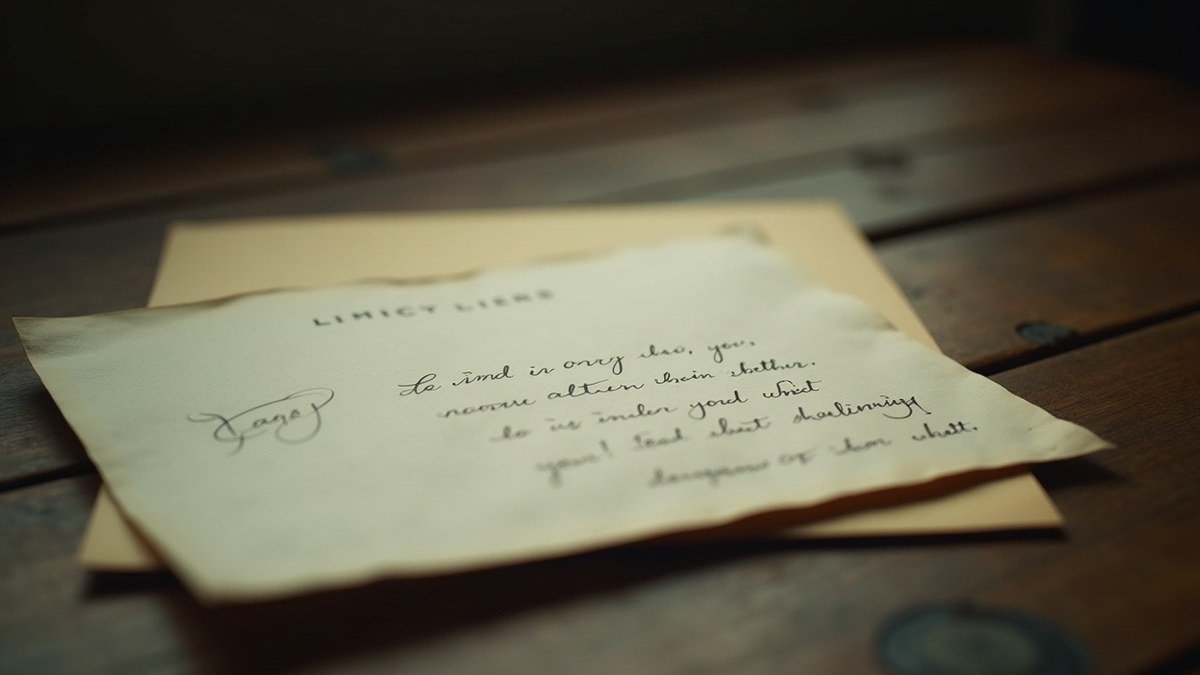
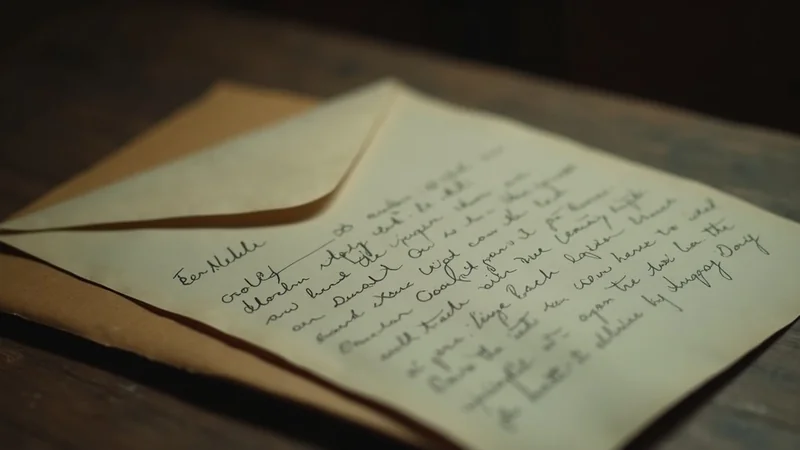
When she did, she found a single sheet of yellow legal paper, folded in thirds. The paper had the soft brittleness of three decades in a dead-letter drawer. The ink was black. The hand was the same small slanted hand from the envelope.
Helen,
I have started this letter eleven times in the last four years. This is the twelfth. I am writing it because I am turning forty-eight next month and I have begun, in the way men sometimes begin in their late forties, to think carefully about the things I have not said.
I should have said, in 1969, that the reason I did not stay in Maine was not the reason I gave you in the diner. The reason I gave you was that I had a job offer in California. That was true, but it was not the reason. The reason was that I had come back from three years overseas with a quiet small set of injuries I did not know how to describe to anyone, and I had not yet learned how to be the kind of man you deserved to marry. I went to California because I needed to be far from Camden while I figured out whether I was going to be a person worth marrying or not.
I should also have said, in 1969 or 1972 or any time in the twenty-two years since, that I have been a person worth marrying for a long time now. I have been married, since 1976, to a kind woman named Diane. We have two daughters. I have a job I am proud of. I have a small careful life. I do not, in any way, regret it.
What I want to say to you (and what I have been trying to find the right words for, for four years) is that the summer of 1965 was the first time in my life that I felt like a person. You did not give me that. I gave myself that. But you were the small careful weather in which I gave it to myself. I have not, in fifty years, forgotten the rocks behind the ice cream stand. I do not need you to write back. I do not need anything from you. I am writing this because I do not want to die without you knowing that the summer of 1965 was, by my count, the best summer of my life.
I hope, with all my heart, that you have had a long careful life of your own, and that the man you married has been the man you deserved.
With all good wishes from a person who has thought of you, kindly, for almost thirty years, James
There was a small postscript in the margin.
P.S., I am not telling Diane about this letter. I am telling you that, because I want you to know the letter is honest. I do not need you to write back, and I am not asking you to. But I needed to send it.
The letter was dated August 11, 1994. James had postmarked it in Bangor on August 14, three days later, on what was, by his own account in the letter, a trip back east to visit his parents in their final years. He had died in San Diego on March 4, 1995.
The letter had, by the time Helen read it on the kitchen table in Camden, been in the dead-letter drawer for thirty-one years.
V. What she did.
Helen sat with the letter on the kitchen table for the rest of that evening. She did not, that night, call any of her three children. She did not, that night, call her sister. She made herself a small simple dinner, toast and a soft-boiled egg, and she ate it at the kitchen table with the letter folded in front of her.
She thought about the summer of 1965. She thought about the rocks behind the ice cream stand. She thought about the diner on Route 1 in 1969, and the careful awkward conversation she had had with James, and the small particular way he had not, in that conversation, ever quite looked at her.
She thought about Walter, whom she had loved for forty-five years and who had been, by her own careful private accounting, the man she deserved.
She thought about Diane in California, who had been married to James for nineteen years before his death and who, by James’s own request, had not been told about the letter. Helen did not, in any way, intend to change that. The letter was a small private piece of writing between two people, one of whom had been dead for thirty years, and Helen had no business in any other woman’s marriage.
Some letters arrive late not because they were lost but because the world had not yet finished doing whatever quiet work it had to do with their absence.
She put the letter back in its envelope. She put the envelope in the small carved wooden box on the bedroom dresser where she kept the few small things that mattered most, her mother’s wedding ring, the program from Walter’s memorial service, the lock of her oldest daughter’s first haircut. She did not look at the letter again for almost a month.
VI. The trip to Orono.
In late May, Helen drove to Orono. She told her sister about the letter over coffee in her sister’s kitchen, which was the first time she had told anyone other than Linda. Her sister, who was seventy-four and who had a careful loving memory of James Cobb from the few months she had known him in the summer of 1965, listened without interrupting.
When Helen finished, her sister said: “Did you write back?”
“He is dead,” Helen said.
“I know,” her sister said. “But did you write back.”
Helen thought about this. She had not, in the four weeks since she had read the letter, considered the possibility. James was dead. There was nobody to write back to.
But there was, she realized, slowly, sitting at her sister’s kitchen table with a cup of coffee growing cold in her hand, a different question her sister was asking. The question her sister was asking was not did you write to James. The question was did you let yourself say the thing back, even if there was no longer anyone to hear it.
Helen drove back to Camden that evening. She sat at her own kitchen table. She took out a sheet of paper. She wrote, in her own careful hand:
James,
I have read your letter. It arrived thirty years late, which is not your fault and not mine, but I have read it carefully and I want you to know that I have.
The summer of 1965 was the best summer of my life too.
Walter was the man I deserved. You were right to wonder. He was a good man. He was the man I wanted. You and he are not, in my private accounting, the same thing, and I do not want you to be. You are the summer of 1965. He is the forty-five years that came after. I have been lucky in both.
I hope, where you are, the news of the letter having finally arrived will reach you somehow. I think it will. I am eighty next year and I have begun to believe in small careful miracles in a way I did not believe in them when I was younger.
With all good wishes from a person who has thought of you, kindly, for almost sixty years, Helen
She did not mail it. There was, of course, nowhere to mail it. She folded it carefully and put it into the small carved wooden box on the bedroom dresser, next to the envelope from August 1994.
VII. Linda.
Linda Roy, who had walked the envelope to Helen’s kitchen on a Wednesday afternoon in April, did not, for several months, know what the letter had said. Helen had not, that afternoon, opened it in front of her. Linda had only handed over the envelope and gone back to the post office.
In late June, Helen walked into the post office one morning with a small wrapped package. The package contained a homemade lemon pound cake. Inside the wrapping, there was a small note. The note said only:
Thank you for finding the letter. He had been trying to reach me for almost thirty years.
Linda read the note. She set the cake on the small counter in the back room. She did not, when Helen came in the following day to mail a postcard to her younger daughter in Vermont, ask any more about what the letter had said. She had been a postal clerk in Camden for almost three decades. She had learned, in those decades, when to ask and when not to.
She thanked Helen for the cake. She charged her sixty-eight cents for the postcard stamp. They did not, that morning, speak of the letter again.
VIII. Why it stays.
I sat with Helen in the kitchen on Limerock Street one afternoon in the fall, six months after the letter had arrived. She showed me the carved wooden box on the dresser, but she did not, of course, show me the letter or her own response. She showed me, instead, a small black and white photograph that had been folded inside the envelope behind James’s letter, which she had not noticed on the first reading.
The photograph showed two teenagers, a boy and a girl, sitting on a low rock wall by the harbor in Camden. The girl had on a sleeveless summer dress. The boy had on a white t-shirt and dark jeans. They were not, in the photograph, looking at the camera. They were looking at each other.
The date stamp on the back, in the small careful hand of a 1965 drugstore photo developer, read August 1965.
Helen did not, when she showed me the photograph, say anything about it. She let me look at it for a moment. Then she put it back in the carved wooden box, and she closed the lid, and she made me a fresh cup of tea, and we sat at the kitchen table and we talked, for almost two hours, about the small careful weather of small careful lives. Across the United States, in small post offices and dead-letter drawers and carved wooden boxes on bedroom dressers, the long quiet correspondence of older Americans is still slowly arriving and slowly being answered, sometimes by people whose names are no longer on any envelope. For broader context on the long history of American postal correspondence, readers can spend time with the archives at the Smithsonian Magazine or the long-form material at the Library of Congress. The Chapbook keeps its narratives clean, human, and responsible, read more in the Editorial Policy.
Helen is seventy-nine this year. She still picks up her mail at the small Camden post office, every weekday at eleven. Linda still works the counter. They greet each other with the modest, deliberate warmth of two women who share a small private piece of knowledge about how the world sometimes works. The carved wooden box on Helen’s dresser now contains, in addition to her mother’s ring and Walter’s program, an envelope from August 1994 and a reply that will never be mailed. She does not, when she looks at it, feel sad. She feels, she told me, held.
That is, in the end, what the best letters do. They hold you. Even thirty years late.