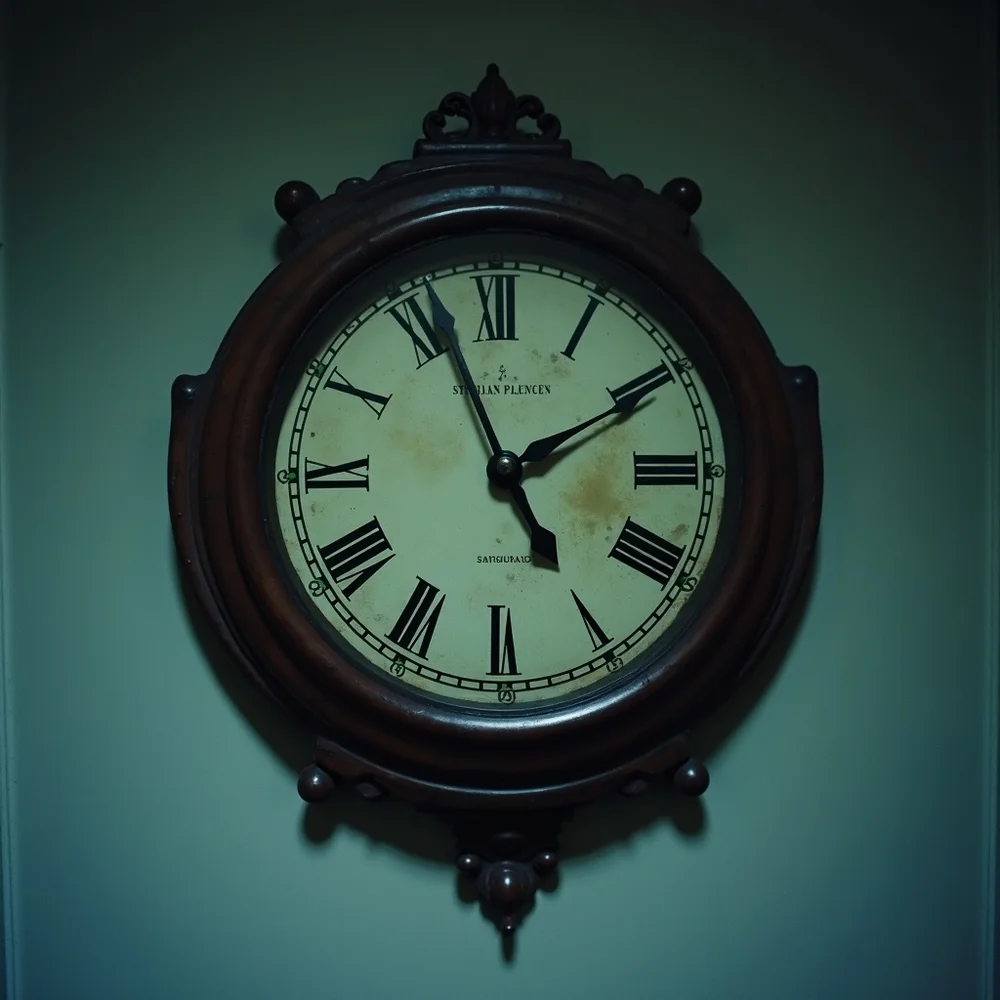
The courthouse clock in Marietta, Ohio, had not told the right time since 1987, and it had not struck the hour in longer than that. On a cold morning last November it struck twelve, slow and clear, twelve full chimes across the square, and then it stopped again, and no living hand had touched it.
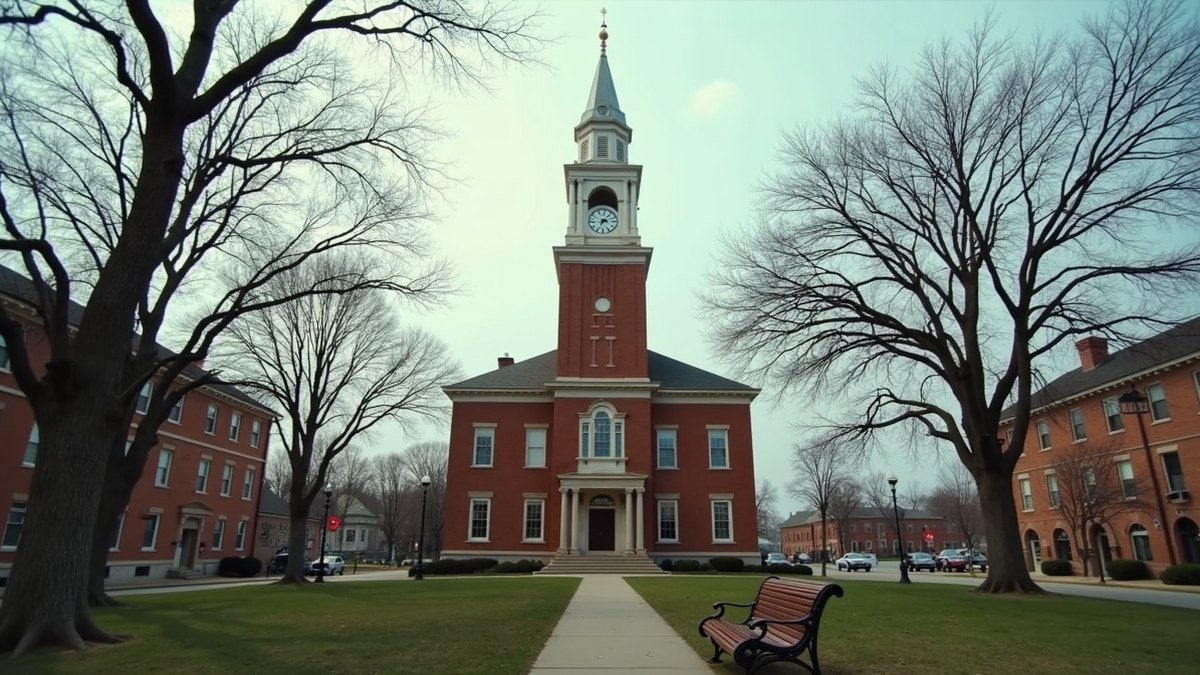
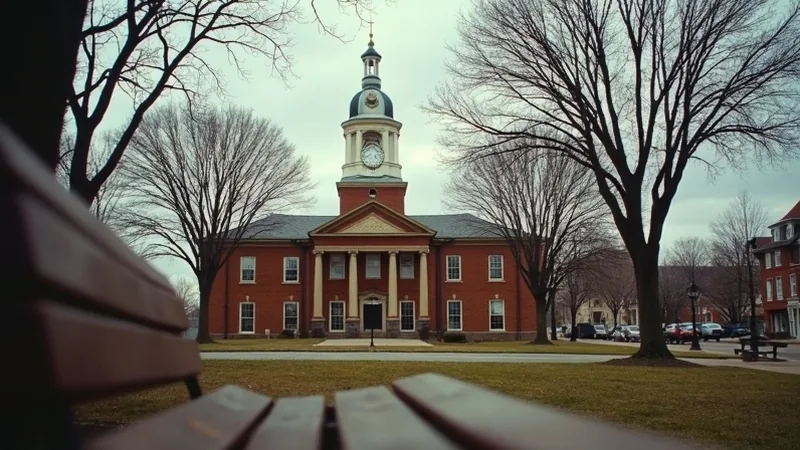
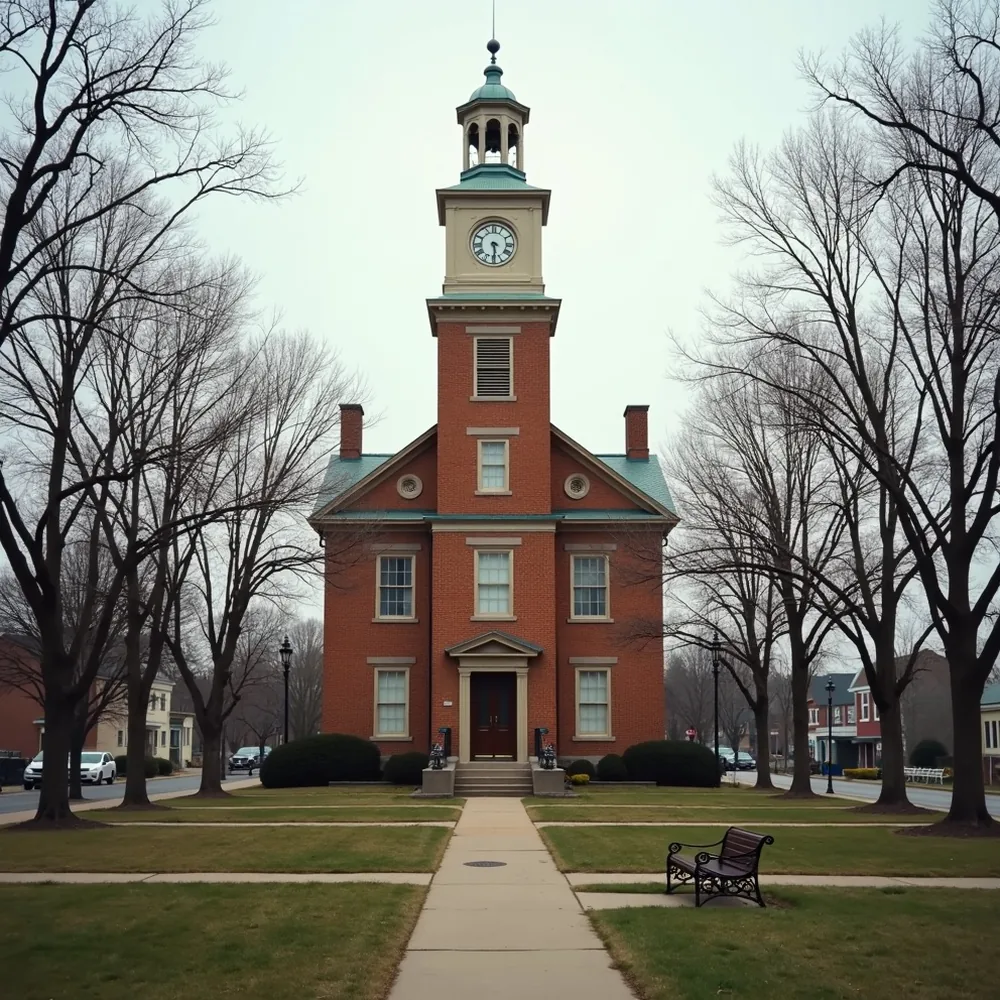
Marietta sits where the Muskingum River runs into the Ohio, in the southeast corner of the state, the oldest permanent settlement in the old Northwest Territory, a town of brick and river fog and a great deal of carefully kept history. The Washington County Courthouse stands at the center of it, a handsome nineteenth-century pile with a clock tower that had been, for the better part of forty years, a fond civic embarrassment. The clock was stopped. Everyone knew it was stopped. The hands sat at a quarter past three, where they had frozen during the Reagan administration, and the works had been declared beyond economical repair sometime in the nineties, and the town had grown so used to the wrong time that visitors who pointed it out were met with a shrug.
So when the bell rang out at noon on that Tuesday in November, the people on the square did not at first understand what they were hearing. The clerks in the courthouse heard it through the stone. The man sweeping the steps heard it. The women at the coffee place across Putnam Street came to the window. Twelve chimes, evenly spaced, unhurried, from a bell that had not made a sound in decades, and then silence, and the hands still frozen at a quarter past three, because the chiming had nothing to do with the hands, and that was the first of the things that did not make sense.
Pam Hollister, the chief deputy clerk of courts, was at her desk on the second floor when it happened, close enough to the tower that the sound came down through the building like something physical. She has worked in that courthouse for twenty-six years. She knew, better than almost anyone alive, that the clock could not ring. She went up to the tower herself, with the maintenance key, that same afternoon, because she is not a person who lets a thing like that sit.
What she found, or rather what she did not find, is where this story properly begins.
It is worth pausing on what kind of person Pam Hollister is, because the whole credibility of this story rests on it. A chief deputy clerk of courts is a professional skeptic by trade. Her days are spent ensuring that what is entered into the record actually happened, that signatures are real and dates are true and nothing goes into the permanent file that cannot be stood behind. She is, in other words, the last person in Washington County who would want to tell you that a dead clock rang, and she is telling you that a dead clock rang, and she photographed the dead mechanism that same afternoon to prove to herself that it could not have.
II. The works.
The clock mechanism in the Marietta courthouse is a thing of cast iron and brass, the size of a small piano, built in the 1880s by a firm in the East that has not existed since before the First World War. It sits in a dusty room at the top of the tower, behind a door that is kept locked and that, Pam confirmed, had been locked, with the only keys accounted for. There was no one in the room. There was no one in the tower. The dust on the floor, she told me, was undisturbed except by her own footprints.
And the mechanism was exactly as dead as it had been for forty years. The drive train was seized. The striking train, the separate set of gears that swings the hammer against the bell, was rusted into a single orange mass. The cables that should have held the driving weights were long gone. By every law of mechanism that Pam or anyone else could apply, the bell that had rung at noon could not have rung, because there was nothing in that room capable of ringing it, and there had not been for two generations.
She is a sensible woman, Pam Hollister, a clerk of courts, a person whose entire professional life is built on records and proof and the refusal of the unverified. She did not enjoy what she was looking at. She took photographs. She wrote it down, with the date and the time, because that is what she does. And she called the one man in Washington County who might be able to tell her what she was missing, a retired clock repairman named Doug Renner.
Doug Renner is seventy-one, blunt, and constitutionally allergic to nonsense. He had maintained clocks across the valley for fifty years, and he had been the one, back in the nineties, to declare the courthouse works beyond saving. If anyone was going to find the trick, the wire, the prankster with a recording, the rational explanation that a rational town wanted, it was going to be Doug. He drove down that same week, climbed the tower, and spent four hours in the works room with a flashlight and a deep scowl.
He came down, Pam told me, paler than he went up, and he did not have an explanation. He had only a complication, which he delivered in his flat way: not only could the clock not have struck, but if it somehow had, it could not have struck twelve. The striking train that counts the hour was the most thoroughly seized part of the entire mechanism. To strike a clean count of twelve, on purpose, evenly spaced, would require the one system in that room that was provably, rustily, incapable of moving at all.
III. The man on the green.
Here is the part that took the story out of the realm of a curious malfunction and into the thing that has kept the town quietly talking ever since.
At noon that same Tuesday, at the same hour the bell rang, an elderly man died, peacefully and alone, on a bench on the courthouse green, no more than a hundred feet from the base of the tower. He was sitting upright, his hands folded on the head of a cane, his face turned up toward the clock, and a woman walking her dog found him a little after the chimes and thought at first he was only resting, because there was no distress in him at all. He had simply stopped, the way the clock had stopped, at noon.
No one knew him. That was the strange thing, in a town where everyone knows everyone. He carried no wallet, no identification, nothing in his pockets but a few dollars, a pocketknife worn smooth with age, and a small brass object that no one at the scene could identify and that turned out, later, to matter a great deal. He was well dressed, in an old-fashioned way, in a wool coat and a hat. He looked, the woman with the dog said, like he belonged to another time.
The bench he chose, I should say, was not a random bench. It faced the tower directly. A man who sits on a town green has many benches to choose from, most of them with pleasanter views, of the gardens or the war memorial or the river end of the square. He had chosen the one bench from which a person sitting upright, hands folded on a cane, would be looking straight up at the courthouse clock. Whatever else is uncertain in this story, that much is a fact a person decided. He came to that green, and he sat down facing the clock, on purpose.
IV. Finding his name.
It fell to the county to find out who he was, and it was harder than it should have been in this century. His fingerprints were not on file. No one matching him had been reported missing. For nine days he lay unidentified in the county system, an old man in a wool coat who had died looking up at a clock that rang for the first time in forty years at the moment of his death, and the coincidence of it sat over the whole town like the river fog.
The break came from the small brass object in his pocket. Doug Renner, of all people, identified it, because Doug had spent his life around exactly such things. It was a clockmaker’s tool, a specialized key, hand-filed, old, the kind a man makes for himself for a particular mechanism and carries for a lifetime. And stamped faintly on it, almost worn away, were initials, and a number, and Doug recognized the form of it as a maker’s mark.
It took Pam Hollister another week of records work, the patient kind, the kind her whole career had prepared her for, cross-referencing old county directories and trade rolls and a box of nineteenth-century courthouse maintenance ledgers that had been sitting in the basement archive the entire time. And what she found, when she finally found it, made her sit down.
She walked me through the records herself, spread across the long table in the clerk’s office, the brittle directories and the maintenance ledgers in their archival sleeves, and I watched a careful woman become quietly certain of a thing she did not want to be certain of. The match was not a guess. The initials on the worn brass key, the maker’s mark Doug had recognized, the name in the 1880s installation ledger, the line of descent a genealogist would later confirm, all of it converged on a single conclusion the way a column of honest figures converges on a sum. The man on the bench was the great-grandson of the man who built the clock, and he had come home to it, and the clock had rung.
The clock in the Marietta courthouse tower had been installed in the 1880s. The records of its installation and its first decades of care named the local man who had assembled it and maintained it, the man who had wound it and adjusted it and kept it true for the early part of its life. The initials on his recorded mark matched the initials worn into the brass key in the dead man’s pocket.
V. The descendant.
I want to be careful here, because the easy version of this story is a ghost story, and the true version is stranger and quieter and more human than a ghost story, and I would rather give you the true one.
The dead man was not, of course, the clockmaker from the 1880s. He was, the genealogical work eventually established, that clockmaker’s great-grandson. He had been born in Marietta, it turned out, but had left as a young man, generations of family memory trailing behind him, and had become, himself, in another state, a repairer and restorer of tower clocks, the same trade as his great-grandfather, carrying the same hand-filed key that had been passed down through four generations of men who fixed time for a living.
He had, the family later told Pam, spoken near the end of his life of wanting to go home. Of unfinished business with a clock. They had not known what he meant. He had grown vague and gentle in his last year, as the very old sometimes do, and had talked about the Marietta tower, the family clock, the one his great-grandfather had built, the one he had heard about his whole childhood and had never, in his long career of restoring other towns’ clocks, been able to come back and restore himself. He had boarded a bus, alone, without telling anyone clearly where he was going, and he had come back to the town his family left, and he had sat down on the green below his family’s clock, and he had died there at noon.
I tracked down a little of his life, with his family’s permission, because a man should not be only the circumstances of his death. He had been good at the work, by every account, sought after, the kind of craftsman other clockmakers called when a tower job went beyond them. He had restored courthouse clocks and church clocks and the clock of at least one minor cathedral, all over the country, all his life, every one of them somebody else’s, while the one clock that was his by blood, the family clock, his great-grandfather’s clock in the town his people had left, ticked nowhere, stopped at a quarter past three, beyond economical repair, a hundred miles past the last place he had ever quite let himself go.
VI. What Doug believes, and won’t say.
I pressed Doug Renner, more than once, on the obvious question, the only question anyone in Marietta actually wants answered, which is how the bell rang. He is a man who spent fifty years proving that clocks obey gears and gears obey physics, and he was not comfortable with the conversation, and I respected that, and I kept asking anyway, because it is my job.
He gave me, in the end, the only thing he had, which was not an answer. He said that in fifty years of work he had seen seized mechanisms do strange small things, settle and shift as old metal will, and that it was not impossible, not quite, that some final stress in the old iron had released and let one part of the train move once, briefly, by itself. He said it the way a man says a thing he does not believe but needs to have said, for the record, the way you whistle past a graveyard.
And then he said the other thing, the thing he asked me not to make too much of and that I am going to give you plainly because it is the truest sentence anyone said to me in Marietta. “A clock that can’t strike,” he said, “struck twelve, clean, the minute that man came home to it and let go. I can give you the engineering. The engineering doesn’t cover it. I’ve quit trying to make it cover it.”
The engineering covers everything except the timing, and it is always the timing, in the end, that the engineering cannot cover.
VII. The repair.
The town did a thing, afterward, that I found moving. The dead man’s family, when they were found, turned out to be modest people, and they could not afford to bring him back to the state where he had lived, and they wondered aloud whether Marietta would object to his being buried in the town his family had come from. Marietta did not object. Marietta took up a collection, the way small towns do, and buried the stranger clockmaker in the old cemetery on the hill above the river, near, as it happens, the grave of his own great-grandfather, the man who built the clock, the two of them a hundred and forty years and four generations apart and now a few yards of Ohio hillside between them.
And then the town did the other thing. It fixed the clock. The story had stirred something, and money came in, more than the collection, enough to do what had been declared uneconomical for thirty years, and Doug Renner, who had pronounced the works dead in the nineties, came out of retirement to lead the restoration himself, because he said it would not be right for anyone else to do it, and because, though he would not say so, he had business with that mechanism now too.
The Marietta courthouse clock keeps time again, as of this spring. It strikes the hours. Doug rebuilt the striking train with his own hands, the same train that had been rust to the core, and he used, in the work, the old hand-filed brass key from the dead man’s pocket, which the family asked him to keep and to use, so that the tool that four generations of one family had carried would be, at last, the tool that set the clock right.
There is an order to that I cannot stop turning over. Four generations of one family carried a small hand-filed brass key, a tool made by the first of them for the clock he built, and three generations of sons fixed every clock but that one, and the key traveled the country in their pockets doing other towns’ repairs, and in the end it came home in a dead man’s coat and did, in Doug Renner’s living hands, the single job it had been made for in the 1880s and never once performed. The tool finished its errand. It only took a hundred and forty years and the strangest morning in the history of the county to get it done.
VIII. Why it stays.
I climbed the tower with Pam Hollister this past spring, up the narrow stairs to the works room, which is not dusty now, where the great iron and brass mechanism turns and ticks in the light from the louvered windows, alive again after forty years. She showed me the striking train. She showed me, in a small frame on the wall that Doug insisted on, the worn brass key. She is still a clerk of courts. She still does not deal in the unverified. She has simply made room, she told me, for one thing she cannot file.
I asked her whether she believed the clock had rung for the man. Whether she thought the bell had known. She is too careful a person to answer a question like that directly, and she did not.
“I believe what the record says,” she said. “The record says the bell rang twelve times at noon on that day, and that a man came home to it and died at peace below it at the same hour, and that the mechanism could not have done it. I wrote it down with the date. That’s all a clerk can do. Write down the true thing, even when the true thing doesn’t add up.”
Some things are not mysteries to be solved but facts to be kept, written down with the date, and carried by the people careful enough to refuse to explain them away.
The line between the strange and the simply unexplained is thinner than we like, and the honest response to a thing that does not add up is not always an answer, but sometimes only an accurate record and an open mind. For the long history of American clockmaking and the craft that four generations of one family carried, readers can spend time with the collections at the Smithsonian Institution or the regional archives of the Ohio History Connection. The Chapbook keeps its narratives clean, human, and responsible, read more in the Editorial Policy.
The clock strikes noon over Marietta again now, twelve clean chimes across the square and the river fog, the way it did the day the stranger came home. Most days no one looks up. But Pam Hollister told me that she does, every day at twelve, from her desk on the second floor, and that she thinks, every time, of an old man in a wool coat on a bench on the green, his face turned up, his hands folded on a cane, finally, after a whole life of fixing other people’s time, exactly where and when he meant to be.