She wound it every morning. It always ran fine. Then at 2:17 a.m., it stopped. Every single night.
The clock had been in the family since 1894. It was an Ansonia mantel clock, made in Connecticut in the small bright window of years between the close of the American Civil War and the turn of the twentieth century when American clockmaking briefly produced some of the finest small mechanical objects in the world. The case was black slate with marbled green inlay. The dial was porcelain. The brass hands had the soft warm color that brass acquires over a hundred and thirty winters in the same drawing room. The clock had belonged to Eliza Whittredge’s great-great-grandfather, then to his daughter, then to her daughter, then to Eliza’s grandmother Constance, then to her mother Constance Anne, and then, after her mother’s slow careful passing in October of the year before, to Eliza.
The clock had not, in any of those generations, given any noteworthy trouble. It had been serviced, by careful written tradition, every seven years, most recently by a man in Beverly Massachusetts who specialized in nineteenth-century New England clockwork and who had pronounced it, in his October 2024 letter to Constance Anne, in remarkable condition, given its age and provenance. It kept time to within two minutes a week, which, for a mechanical clock of its vintage, was about as well as a person could expect.
Eliza had inherited it on a damp morning in mid-November, when her younger sister had finally finished organizing their mother’s estate and the small careful question of what to do with the clock had been settled in the way it had been settled in five previous generations. The clock came to the oldest daughter. Eliza was forty-seven. She was the oldest daughter. The clock would, in due time, go to her own daughter Margaret, who was twelve and who, the morning the clock arrived in the house in Salem, had touched the brass key with a careful seriousness that suggested she understood, even at twelve, what she was inheriting eventually.
Eliza placed the clock on the mantelpiece in the front parlor of the house on Chestnut Street. She wound it with the brass key. She set the time against her phone. It began to tick.
II. The first morning.
For thirteen days, the clock kept time. It chimed once on the half-hour and a small soft set of bells on the hour. It lost, in those thirteen days, perhaps a minute and a half in total, which Eliza adjusted on the second Sunday morning the way her mother had adjusted it on the second Sunday morning of every month for forty-three years.
On the fourteenth morning, she came downstairs to wind it and noticed that it had stopped.
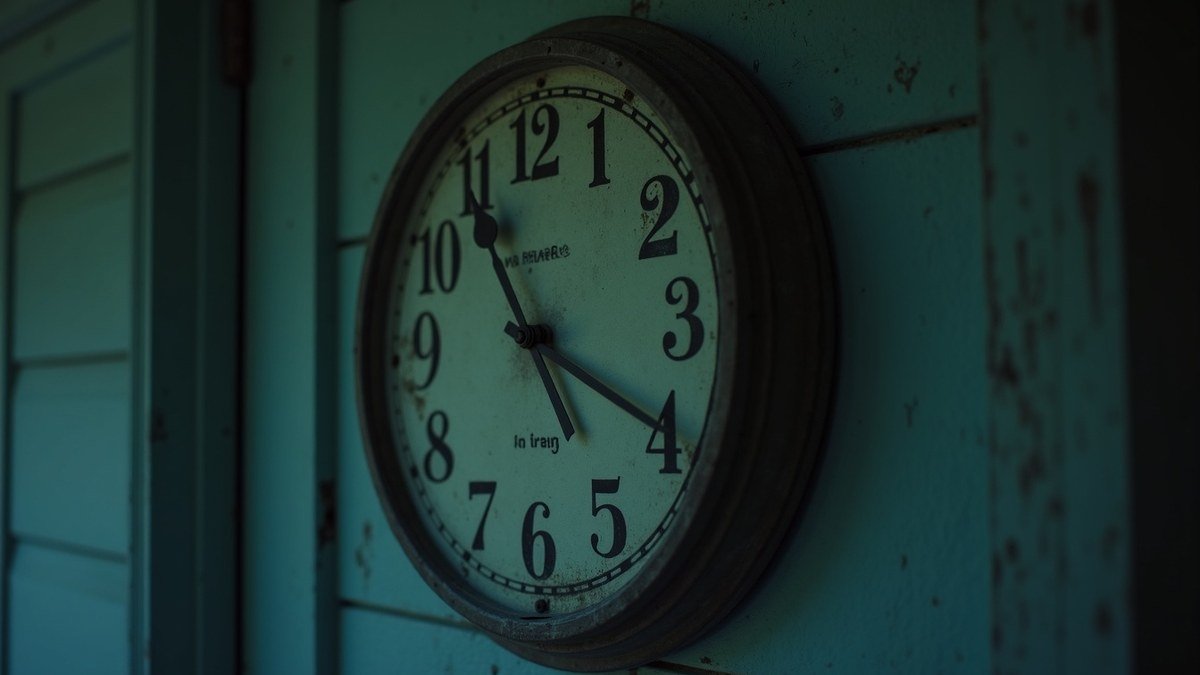
The hands had stopped at exactly seventeen minutes past two. She knew this because the minute hand had stopped on the seven and the hour hand had stopped just past the two, in the small careful angle that an Ansonia mantel clock makes at that exact moment in the night. She had not, in the previous thirteen mornings, found the clock stopped. She thought, with the calm of a person who has lived with mechanical things, it just needed a wind. She wound it. It began to tick.
She did not, in that moment, think anything more about it.
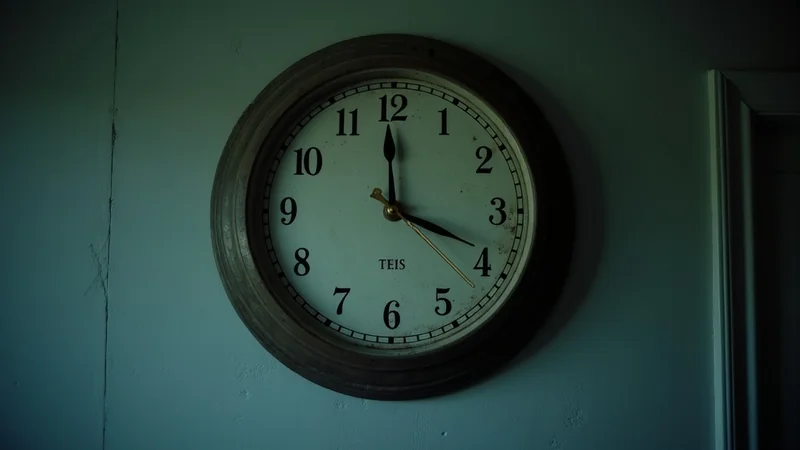
The next morning she came downstairs at six-thirty. The clock had stopped. The hands were at seventeen minutes past two.
She stood, in her robe, in front of the mantel for almost a full minute. The morning light came in through the tall front parlor windows the way it comes in through the windows of old Salem houses in November, which is to say slowly and at the strong angles of a sun that has been low for a long time and will be low for longer. She looked at the clock. She wound it. It began to tick.
She thought, this time, I should call Mr. Pruitt in Beverly.
III. Mr. Pruitt.
She did not call him immediately. She called him on the third morning, after she had come downstairs at six-thirty for the third day in a row and had found the clock, for the third time, stopped at seventeen minutes past two.
Mr. Pruitt was, on the phone, the calm and faintly amused presence she remembered from her mother’s funeral the previous October, where he had come, briefly, to pay his respects in the small careful way that craftsmen sometimes pay respects to the families of the objects they have cared for over many decades. He listened to her describe the problem. He asked a small list of careful questions. Was the clock perfectly level? Yes. Had it been moved? Only the one time, from her mother’s mantel to her own. Was the room warm enough? Yes, the radiator in the parlor was, if anything, a little overactive. Had she perhaps wound it slightly too tight? She had wound it the way her mother had taught her, which was the way Mr. Pruitt had told her mother, which was the way the clock had been wound for a hundred and thirty years.
Mr. Pruitt was quiet for a moment.
“Bring it to me,” he said, “if you can. I will look at it. But first, try one thing. Move it tonight. Just three or four inches to the right. Do not change anything else. Just move it. See what happens.”
She did. That night, before she went up to bed, she lifted the clock (carefully, with both hands, the way her mother had taught her) and she set it down four inches to the right of its usual position on the mantelpiece. She wound it. It was, when she went up to bed at eleven, ticking steadily.
She came downstairs at six-thirty.
The clock had stopped at seventeen minutes past two.
IV. Mr. Pruitt’s parlor.
She drove the clock to Beverly on a Saturday in late November. Mr. Pruitt’s workshop was a small carriage house behind a Federal-era home a few blocks from the harbor. He was a man in his late sixties, with the careful slow movements of a person who had spent fifty years working with springs and tiny brass pinions and miniature steel pivots, and who had learned, over those fifty years, that fast movements break things.
He set the clock on his workbench. He opened the back. He took out his loupe. He worked on the clock for almost two hours, in the small careful silence that clockmakers work in, while Eliza sat in a small armchair in the corner of the workshop and read a 1958 issue of American Clock magazine that he had handed her without comment.
When he finally looked up, he had a faintly puzzled expression that she had not seen on his face before.
“Mrs. Whittredge,” he said.
“Yes.”
“I cannot find anything wrong with this clock.”
“Nothing at all?”
“Nothing. The mainspring is fine. The escapement is calibrated. The pivots are clean. The pallets are seated. The strike train is engaged. The clock should run.”
He paused. He looked at the clock. He looked back at her.
“I will keep it overnight,” he said. “I will run it on my bench. I will see what it does.”
She left the clock with him. She drove back to Salem. She picked Margaret up from her Saturday violin lesson. She did not, that night, sleep especially well.
Mr. Pruitt called her at seven-thirty in the morning on Sunday.
The clock had stopped on his bench at seventeen minutes past two.
V. The family record.
It was Mr. Pruitt who, the following Tuesday, suggested in his quiet careful way that Eliza might consider looking at the family record book. The Whittredge family, on her mother’s side, had kept a careful written record of the clock since approximately 1907, when Constance’s grandfather, a Boston attorney with a tidy mind, had started a small leather-bound ledger in which the family was meant to note any servicing, repair, or notable behavior of the clock. The ledger had passed down with the clock. Eliza had it. She had not, in the four weeks she had owned both, looked at it.
She drove home from Mr. Pruitt’s that Tuesday afternoon. She made herself a cup of tea. She took the ledger off the bookshelf where she had placed it the day the clock had arrived.
The ledger was a hundred and seventeen years old. The paper was the soft yellowed paper of the early twentieth century. The handwriting changed, every few decades, as the keeper of the book changed. There were small entries, mostly, serviced Pruitt 1953, new mainspring 1971, strike train cleaned 1986, serviced Pruitt 2024. There were small marginal notes about the clock’s relocation when family members moved, about a near-fall during a small earthquake in 1936, about the small dent in the case that had been acquired during a poorly executed move in 1958.
There were three entries Eliza had not expected to find.
The first was dated November 12, 1907. It was in her great-great-grandfather’s hand, the man who had originally bought the clock in 1894, who had been the head of the family at the time the ledger had started. The entry said simply: Clock stopped 2:17 a.m. for the third time in a week. No mechanical cause. M.W. died at this time on Nov 6.
M.W., Eliza confirmed by checking the small family tree at the front of the ledger, was Mabel Whittredge, her great-great-grandfather’s elder sister, who had died of pneumonia in Boston on the sixth of November, 1907.
The second entry was dated April 4, 1962. It was in her grandmother Constance’s hand. Clock stopped 2:17 each night for two weeks. Then stopped. Mother died March 21 at 2:17 a.m. Coincidence?
Mother, in that entry, was Constance’s mother, Eliza’s great-grandmother Henrietta, who had died at home in Salem at the age of seventy-six on the night of March 21, 1962.
The third entry was dated October 27, 2024. It was in her own mother Constance Anne’s hand. Clock stopped at 2:17. Will note any change. C.A.W.
There were no further entries. Eliza’s mother had died on October 31, 2024, four days after that entry.
She had died at home in her bedroom, with Eliza and her sister at her bedside.
The hospice nurse, in the careful documentation that hospice nurses make, had recorded the time of death.
It had been two seventeen in the morning.
VI. The thing she did not call it.
I should be careful, here, about what I am saying and what I am not saying. I have been writing for The Chapbook for almost nine years, and I am not in the business of writing ghost stories. The Chapbook does not publish supernatural claims. The clock in the front parlor of the house on Chestnut Street had, over the course of one hundred and seventeen documented years, stopped at exactly two-seventeen in the morning on three separate clusters of occasions, all of which had coincided, by the careful written record of the Whittredge family ledger, with the deaths of women on the Whittredge side of the family who were the previous holders of the clock.
I cannot, and Eliza cannot, and Mr. Pruitt cannot, explain this mechanically. Mr. Pruitt is, by his own admission, the wrong person to be asked to explain it. He is a clockmaker. He understands escapements and mainsprings. He understands the clock as a small machine made of brass and steel. He does not understand, and does not pretend to understand, what is happening when a clock that has no mechanical fault stops, for many nights in a row, at the time at which previous holders of it have stopped breathing.
What Eliza did, that Tuesday night, was call her sister. They talked for almost two hours. They did not, by the end of the conversation, have any explanation either. They had, instead, a small private decision to make about what to do with the clock.
Some inheritances arrive with their own quiet logic. The work of the heir is to decide whether to ask the inheritance what it is, or whether to simply accept that it has come.
The sister proposed, gently, that the clock be put into storage. Eliza, after a long pause, said no. She said the clock had been in the family for a hundred and thirty years and she was not, in her one year of holding it, going to be the first holder to put it in a box.
She returned the clock to its place on the mantelpiece. She wound it. It began to tick.
It stopped, that night, at two-seventeen.
VII. The morning Margaret asked.
Eliza did not, for almost three months, tell her daughter Margaret about the clock or the ledger. Margaret was twelve. Margaret had her violin lessons and her seventh-grade homework and the small careful social arithmetic of a Salem twelve-year-old, and Eliza did not, in her own quiet judgment, see any reason to put the weight of the ledger on her daughter’s shoulders any earlier than necessary.
The clock stopped every morning at two-seventeen for almost six weeks. Then, on the first of January, it began running normally again. Eliza, who has continued the practice of winding it each morning and recording any noteworthy behavior in the ledger, has not heard from the clock since.
Margaret asked her about it on a Sunday morning in February. She had, in the small careful way of twelve-year-olds, been watching her mother for some time. She asked, at breakfast, why her mother kept opening the back of the clock and looking inside, when she had been winding it for almost four months and the clock seemed to be running fine.
Eliza thought about it. She finished her toast. She took a long careful sip of her coffee.
She told Margaret about the ledger.
Margaret listened. She did not, in the way Eliza had braced for, get scared. She did, instead, what twelve-year-olds sometimes do when offered an adult-sized piece of information: she asked, with the careful seriousness of someone trying to be worthy of it, whether she could read the ledger.
Eliza handed it to her.
Margaret read it slowly. She read it twice. She looked up.
“Will it stop for you?” she asked.
Eliza had not, until that moment, considered the question in those terms.
“I do not know,” she said. “I suppose, when I am old, we will see.”
Margaret nodded. She put the ledger down carefully on the kitchen table. She did not, in the way of bright twelve-year-olds, ask the further question. She asked, instead, the more interesting one.
“Mom,” she said. “If it stops for you. Will I be the one who finds it?”
VIII. Why it stays.
I will not, in this piece, attempt to explain what stops the clock at two-seventeen. The world is full of small mechanical objects that do small unexplained things, and I am not the person to tell anyone what the long quiet machinery of a Connecticut mantel clock from 1894 is doing on the nights it stops. I am, instead, telling you a story about an inheritance, about a woman who received, from her mother, an object that came with its own small private weather, and about her quiet decision to keep the object in her house rather than put it away.
The clock is still on the mantelpiece on Chestnut Street. It is, as I write this, ticking quietly. Margaret, who is now thirteen and who has begun to take an interest in the ledger in the way some children take an interest in old photographs, has continued the modest, deliberate tradition of noting any unusual behavior. She has not, in the eleven months since she first read the ledger, recorded a single entry.
Across the United States, families are quietly holding small old objects that came down through three or four or five generations and that carry, in their continued presence on a mantelpiece, the slow inheritance of the people who have held them. Some of these objects are unremarkable. Some of them are not. For broader context on American family heirlooms and material history, readers can spend time with the careful work at the Smithsonian Magazine or the long American archives at the Library of Congress. The Chapbook keeps its narratives clean, human, and responsible, read more in the Editorial Policy.
Eliza is forty-eight this year. She still winds the clock every morning. She does not, when she is home alone in the evening, look at it more often than she used to. The clock is, she has decided, a part of the house. She is, for the time being, the holder.
Margaret is thirteen.
The clock, today, is ticking.