The carrier confirmed: that number had been retired in 2002. The call had lasted three minutes and forty-one seconds.
The house on Avenham Avenue in Roanoke had been Helen Tate’s home since 1989. She had moved into it as a young wife of thirty-two, the year her older daughter Emily had been born, and she had stayed in it through her marriage, through her husband’s slow steady career at Norfolk Southern, through the births of her two other children, through the kitchen renovation in 1998, through the small painful divorce in 2005, and through the long careful single life she had built after. She was, by the year I am writing about, sixty-seven. She had been retired from her work as a public-school librarian for three years. Her three children were grown and lived, respectively, in Charlotte, in Raleigh, and in Brooklyn. The house was, most days, quiet.
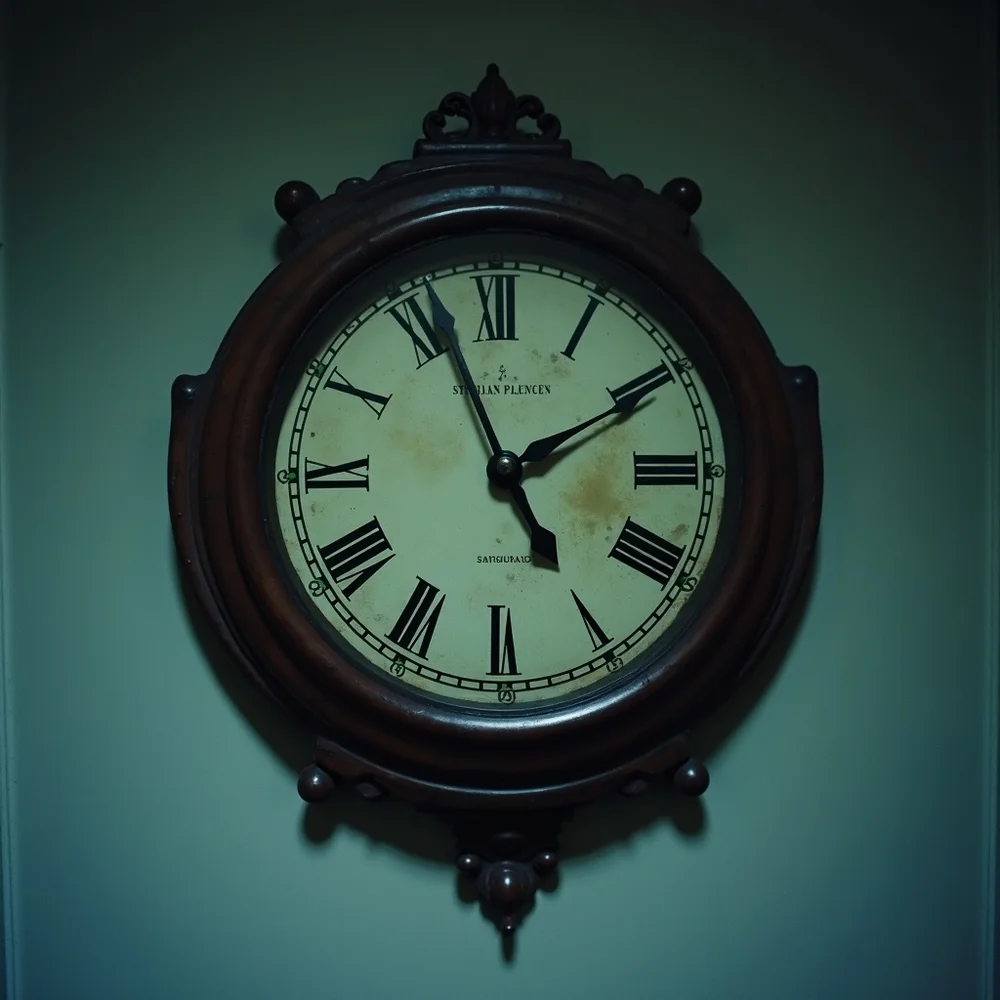
On the Tuesday evening in question, she had eaten a small dinner alone (a baked sweet potato with some butter and a small green salad) and she had settled into the back parlor with a paperback novel that her older daughter had sent her in the mail two weeks earlier. The novel was a careful slow-paced family saga set in early twentieth-century Virginia. She was on page sixty-three. The hour was, by the small wooden ship’s clock on the bookshelf, eleven seventeen in the evening.
The phone rang.
It was the landline. She had kept the landline through every wave of telephonic improvement, the way Roanoke widows of a certain age sometimes keep landlines, because her mother had used to call her on it and the routine of answering the landline had survived her mother’s passing in 2014 by sheer habit. The landline rang, on average, three or four times a week. It was almost always either a robocall about her car’s extended warranty or her younger daughter, Caroline, in Raleigh, who had a particular fondness for the landline and used it whenever her cell phone was charging upstairs.
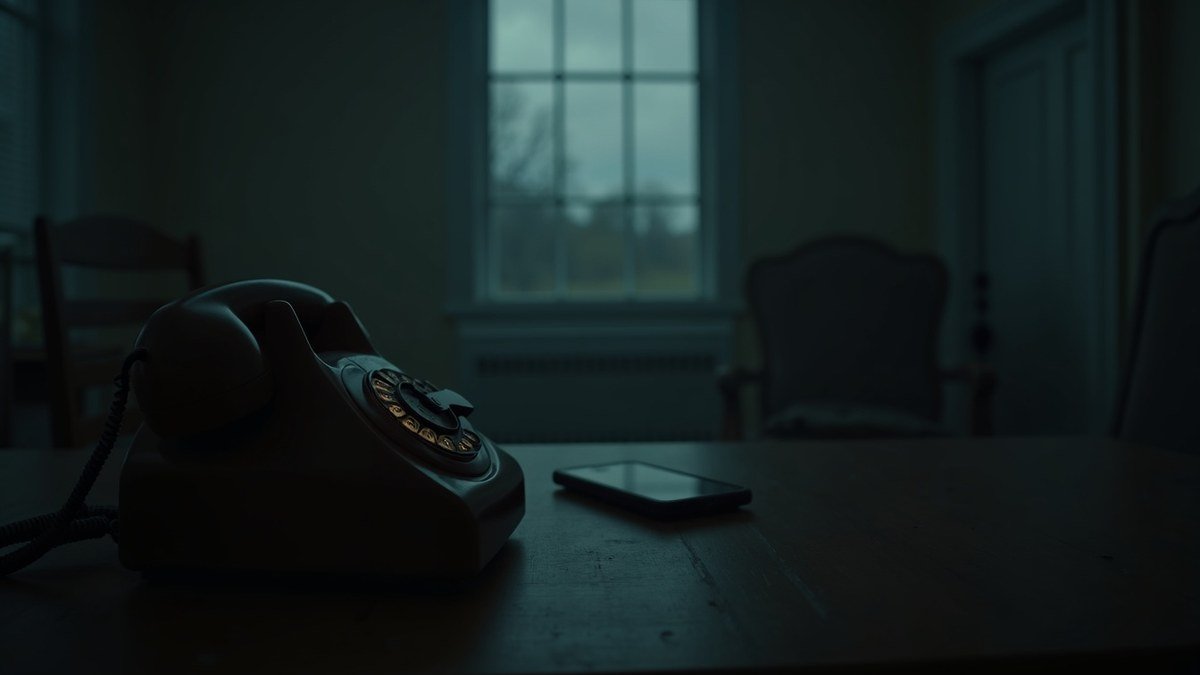
Helen got up. She walked to the small mahogany side table where the landline lived. She picked up the receiver.
“Hello?”
There was a small pause, the kind of pause that you sometimes get on long-distance calls from rural Virginia, where the lines have not been fully upgraded.
“Hi, sweetheart,” her mother said. “I just wanted to hear your voice.”
II. The voice.
I have to be careful here, in the way I am careful about the clock in the previous piece. I am not going to make any claim about what happened on the telephone in Helen Tate’s back parlor on the Tuesday evening in question. I am going to tell you only what was said, what was confirmed by the cellular carrier afterward, and what Helen did about it.
The voice on the other end of the line, Helen told me when I sat with her in that same back parlor four months later, was unmistakably her mother’s. It was not a similar voice. It was not a relative whose voice resembled her mother’s. It was, in the precise and unambiguous way that the voices of our mothers are unambiguous to us, her mother. The cadence. The slight Virginia softening of certain consonants. The small particular way her mother had always said sweetheart, which Helen had not heard in more than ten years.
Helen, who had been a public-school librarian for thirty-two years and who was, by training and disposition, a careful and skeptical person, did not, in the first moment, hang up. She did not, in the first moment, do any of the things a skeptic in a magazine column might do. She did the thing a daughter does. She said: “Mama?”
There was another small pause.
“Yes, sweetheart,” her mother said. “It’s me.”
III. The conversation.
Helen Tate is, by her own description, a person who does not believe in ghosts. She does not believe in mediums. She does not believe in the kinds of stories that appear, on slow news weeks, in the back pages of regional newspapers in October. She had not, before the Tuesday evening in question, ever experienced anything she could not, with a small amount of careful thought, explain.
She had also been a daughter for sixty-seven years. She had been her mother’s daughter for fifty-five of those.
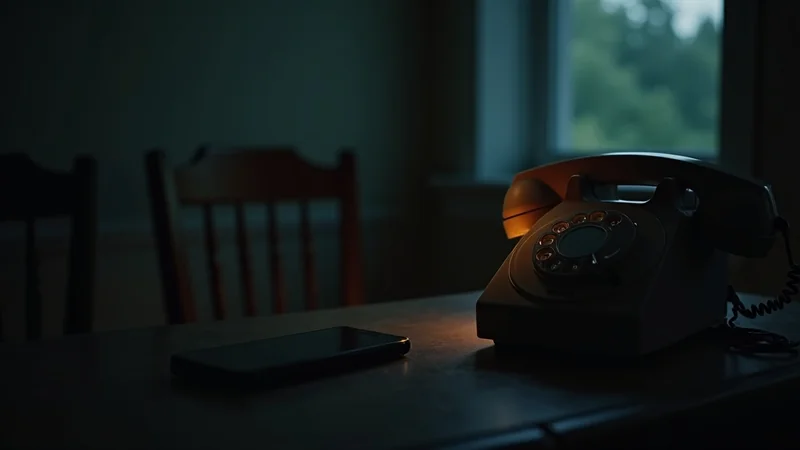
She did not, in the moment, ask the voice on the other end how it had come to be on her landline at eleven-seventeen on a Tuesday night in February. She did not, in the moment, demand verification. She did, instead, what a daughter who has not heard her mother’s voice in eleven years would do. She sat down on the small velvet stool by the side table, and she held the receiver to her ear, and she had a conversation.
She told her mother about her older daughter Emily’s new job in Charlotte. She told her mother about her younger daughter Caroline’s preparation for the bar exam. She told her mother about her son Henry’s apartment in Brooklyn, which her mother had never seen and which, in the small careful protocol of the call, Helen described as carefully as she would have described it to a person who genuinely had not seen it.
Her mother asked, in the small specific way she had always asked, after the rosebush by the back porch. Helen told her it had survived the winter. Her mother asked about Helen’s brother Lee, who lived in Lynchburg. Helen told her about Lee’s hip surgery in October. Her mother said give him my love in the small specific tone she had always used when she had wanted to be very sure Helen would actually pass on the message.
The conversation lasted, by the careful timestamp Helen examined afterward, three minutes and forty-one seconds.
Near the end, Helen’s mother said: “Sweetheart, I have to go.”
Helen, who had not, the entire conversation, addressed the impossibility of what she was experiencing, finally allowed herself one small careful question.
“Mama,” she said. “Where are you?”
“It’s fine, sweetheart,” her mother said. “It’s all fine. I just wanted to hear your voice.”
There was the small soft click of a hang-up. Then the dial tone.
IV. The carrier.
Helen sat on the velvet stool for almost twenty minutes. She did not cry. She did not, she told me, do anything dramatic. She did the small careful thing she had learned to do in her thirty-two years as a librarian when confronted with a piece of information she could not immediately process. She made a record.
She wrote down, on the back of a grocery receipt that was on the table, the time. 11:17 PM, Tues. She wrote down the duration of the call. She wrote down the small specific phrases her mother had used. She wrote down the modest, deliberate question her mother had asked about the rosebush, which had been planted by her father in 1991 and which her mother had cared for, year after year, until her own mobility had begun to fade in 2012.
She then did the careful skeptical thing. She picked up the receiver and she dialed *69, which on the landline carrier she had used since 1989 was the code that would tell her the number of the last incoming call.
The number that came back was her mother’s old landline. 540-555-7384.
Helen knew the number. She had dialed it herself, perhaps a thousand times, between 1989 and 2014. Her mother had lived in a small house in southwest Roanoke until 2002, when she had moved into an assisted-living facility in Salem after her first small stroke. The landline at the small house had been disconnected, by Helen’s own request, in the month after her mother had moved.
The number had not, by any careful accounting, existed as an active line for twenty-three years.
V. The morning.
Helen did not sleep that night. She did not, she told me, lie awake in any panicked way. She lay in bed with the quiet, unhurried list she had written on the grocery receipt on the nightstand beside her, and she watched the ceiling, and she did the long quiet arithmetic of a person who has just had a conversation she cannot account for.
By seven the next morning, she had called the local office of Verizon, which had taken over the landline carrier in 2005 after a long series of telecommunications mergers that Helen had not followed closely but that had ended, like most such mergers, with her phone bill arriving from a different company. She told the representative (a calm patient woman named Anita who was, by the sound of her voice, in a call center somewhere in Tennessee) that she wanted to verify the source of an incoming call she had received at 11:17 the previous evening.
Anita looked it up. Anita confirmed the call. Anita confirmed the time. Anita confirmed the duration: three minutes and forty-one seconds.
Anita then said, in the careful flat tone of a person reading information off a screen: “Ma’am, the originating number for that call is showing as deactivated. The records say the number was retired on March 14, 2002. We, I am sorry, ma’am, this would have to be an error in our system. Numbers that are retired are released back into the available pool and reassigned to other customers, sometimes within several months.”
“Has the number been reassigned?” Helen asked.
There was a small pause while Anita looked.
“No, ma’am,” Anita said. “That number has not been reassigned to any active line. It has been in the available pool since 2002.”
Helen waited.
“I do not understand how the call reached you,” Anita said, finally, with the neat, patient honesty of a customer service representative who has run out of standard scripts. “I am going to escalate this to our technical team. Can someone call you back in the next forty-eight hours?”
Helen said yes. She gave Anita her cell phone number. She thanked her.
Verizon called back, exactly forty-three hours later, with a careful prepared statement read by a senior technical representative whose name Helen did not catch. The statement said that the carrier had no explanation for the call. The statement said that no record existed of any line dialing the number in question that evening. The statement said that, while the carrier was committed to investigating any anomalies in service, this particular anomaly could not, with the available data, be resolved.
The representative said, near the end, with a small voice that did not match the prepared statement: “Ma’am, I have been doing this work for twenty-two years. I have never, in all that time, seen a record like this one.”
VI. The rosebush.
It was the question about the rosebush that Helen could not, in the days afterward, stop thinking about.
The rosebush had been planted by her father in 1991. Her mother had cared for it, in the small particular way she had cared for it, until her health had failed. Helen had taken over the care of the rosebush in 2012, when her mother had moved to assisted living and Helen had inherited responsibility for the house in southwest Roanoke. She had moved the rosebush, two years later, to her own house on Avenham Avenue when she had sold the southwest Roanoke house following her mother’s passing. The rosebush was now in her back yard. It had survived the move. It had survived twelve subsequent winters.
The rosebush had not been visible from the front parlor where the landline was. It was not, in any way, something that an observer outside Helen’s house could have seen or known about. Her mother’s question about it, has the rosebush made it through this winter, sweetheart?, was a question that could only have come from a person who had once tended that specific rosebush herself and who remembered, with the careful slow love of a mother, that her daughter had taken responsibility for it.
The question was not, in Helen’s careful skeptical analysis, the kind of question a prank caller would think to ask.
Some details, once you have heard them, you cannot fit back into the smaller box of explanation.
VII. What Helen did about it.
I sat with Helen four months after the call. She had, in those four months, done a small deliberate set of things.
She had called her younger sister, who lived in Lynchburg. She had not, in the call, told her sister about the conversation. She had asked her sister, instead, whether their mother had ever, in the years before her death, said anything about wanting to call after she was gone. Her sister, who had been their mother’s primary caregiver in the last two years of her life, had said no, that their mother had not, in any of the conversations they had had at the end, made any spiritual or supernatural claims. Their mother had been a member of the small Presbyterian church on Brandon Avenue. She had believed, in a careful Presbyterian way, in heaven. She had not believed in calling from it.
Helen had told her older daughter Emily, the librarian’s instinct for confiding in another woman of careful disposition winning out over her caution. Emily had listened. Emily had not, to her mother’s modest, attentive surprise, dismissed the story. Emily had, instead, told Helen that she had had a small similar experience after her own grandmother’s passing, a brief moment, in the parking lot of a grocery store in Charlotte the week after the funeral, when she had heard, in the small soft middle distance, her grandmother say her name. She had not told her mother about it at the time because she had not, she said, wanted to overlay the grief of the moment with something she could not explain.
Helen had not, in four months, told her two other children. She had not, in four months, told her brother Lee. She had not, in four months, told anyone at the church.
She had told only Emily and me.
She had also, over those four months, sat in the back parlor several evenings a week, with the landline on the small side table beside her, and she had read her paperbacks. She had not, she told me, been hoping for the phone to ring again. She had not been afraid of it ringing. She had, instead, been quietly accepting that the landline was now a piece of furniture with a particular small history. She would not, she told me, ever sell the house with the landline still in it. The landline, like the clock in the Whittredge family, like the rosebush from 1991, was now a piece of the inherited weather of her life.
VIII. Why it stays.
I am not, in this piece, going to argue that the phone call was a call from the dead. I am not going to argue that it was not. I am going to tell you, instead, what the carrier said, what the records showed, and what a sixty-seven-year-old librarian in Roanoke did about a three-minute-and-forty-one-second conversation that, by every available piece of technical documentation, did not have a possible explanation.
She wrote it down. She told her older daughter. She kept the landline. She kept the rosebush. She continued the life she had been living, with one small new fact tucked carefully into it.
Across the United States, ordinary people are quietly receiving small unexplainable things, calls, sounds, glimpses, small precise coincidences that they cannot account for and that they often, in the careful private way of most adults, decide not to talk about. Some of them are mistaken. Some of them are not. I am not the person to tell anyone which is which. For broader context on the long careful study of American spiritual and psychological experience, readers can spend time with the work of the Library of Congress or the long-form reporting at the Smithsonian Magazine. The Chapbook keeps its narratives clean, human, and responsible, read more in the Editorial Policy.
The landline in the back parlor of the house on Avenham Avenue still rings, three or four times a week. It is, almost always, either a robocall about an extended warranty or Caroline calling from Raleigh because her cell phone is charging. Helen still answers it. She still says hello in the same quiet, exacting way she has said hello on a landline since 1989.
She has not, in eleven months, heard her mother’s voice again. She is not, in any way, hoping she will. She is, instead, doing what a daughter does when a daughter has been given a small inexplicable kindness she did not ask for. She is keeping the rosebush.
The rosebush, this June, is in full bloom.