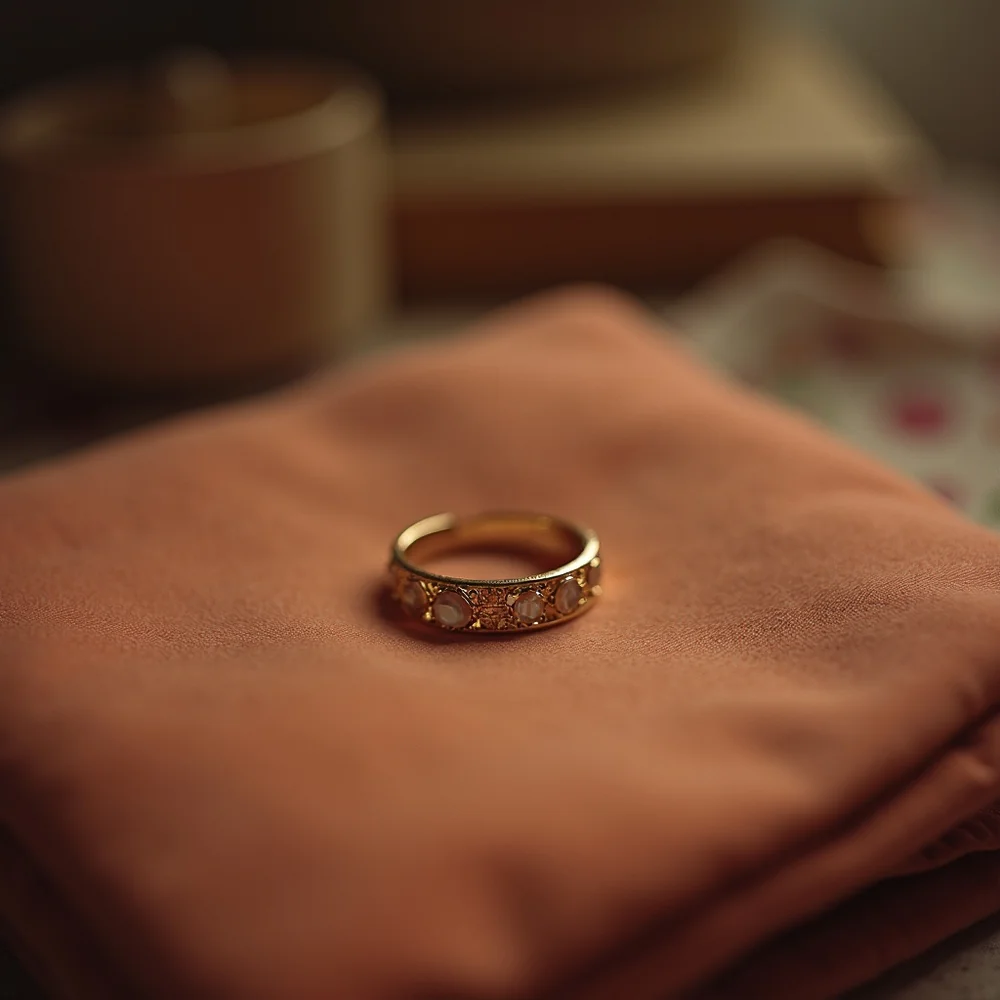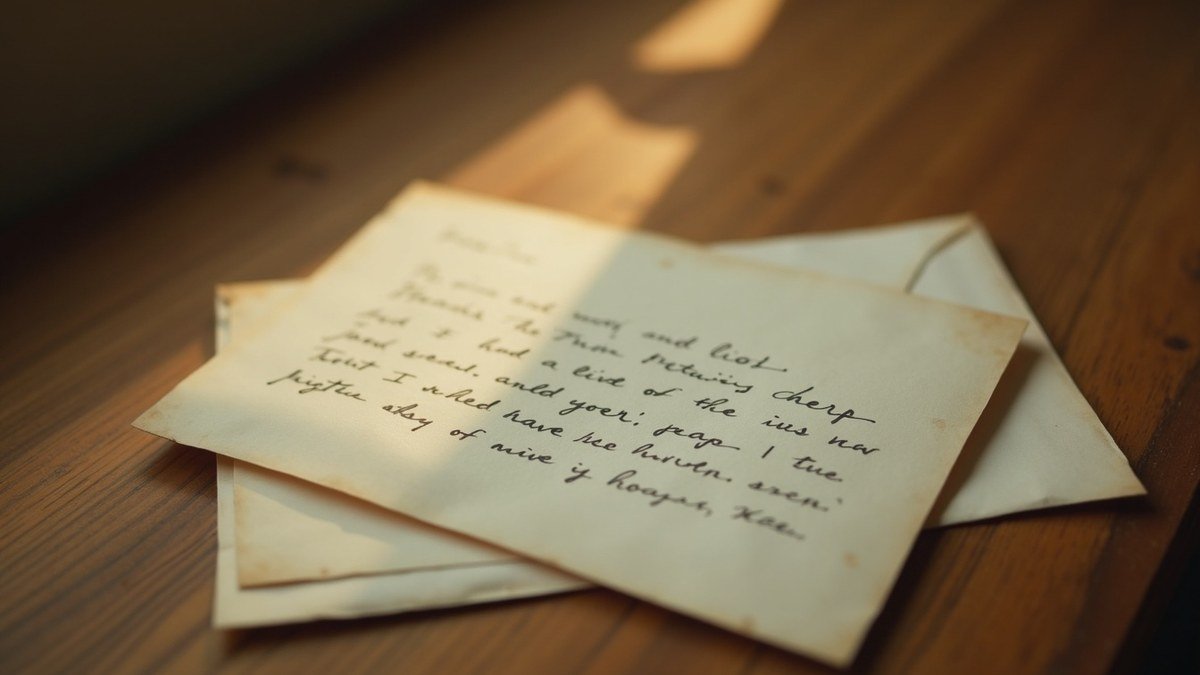
He had sent her one letter every year on her birthday for twenty-three years. She had never written back. Then, in the twenty-fourth year, she did.
The post office on Elmwood Avenue in Burlington was the small branch that Henry Pellerin had been mailing his letters from since 2001. He was forty-eight. He worked as a regional sales representative for a small Vermont maple-syrup cooperative, which meant he spent most weeks driving the slow loop between Burlington and the small producer farms in the Northeast Kingdom, and which meant he had, by the slow accidents of his job, become the kind of mid-life Vermont bachelor who knew every diner counter between Saint Johnsbury and Newport by the first name of the woman who poured the coffee.
He had been in love with one woman his entire adult life. Her name was Eleanor Worth. They had met in the small autumn of 2000, on a Wednesday evening in late September, at a small folk show at the old Higher Ground in Winooski. He had been twenty-three. She had been twenty-two. They had stood next to each other through the entire two-hour set, in the small accidental geometry of a crowded room, and at the end of the show they had walked out onto Pine Street together and talked, in the slow cold Vermont autumn air, until almost two in the morning.
He had given her his phone number on a torn corner of a small Higher Ground flyer. She had given him hers on the back of a receipt from a sandwich place on Main Street. They had gone out, in the slow careful way that small Vermont relationships in the early 2000s started, four times over the following six weeks.
In early November, she had told him (at a small kitchen table in her small apartment on North Champlain Street, with the kind of plain honesty that twenty-two-year-olds sometimes deploy when they have decided to be honest about something difficult) that she did not, in any usual sense, see the slow available future of being in a relationship with him. She had told him this without unkindness. She had told him that she liked him, that she enjoyed his company, that she had been thinking about it for almost three weeks. She had told him that she was, by her own honest internal accounting, in the middle of figuring out a number of things about her own life, and that being in a relationship was not one of the things she was in a position to figure out at the same time.
She had asked him, gently, whether they could end the small four-week thing they had started.
He had said yes.
He had also, in the small uneven shape of the evening, asked her whether he could write to her sometimes. Just letters. He had said it without quite knowing what he was asking. She had looked at him for a long moment. She had said yes.
He had walked out of her apartment at almost eleven that evening, on the second of November, two thousand. He had not seen her again.
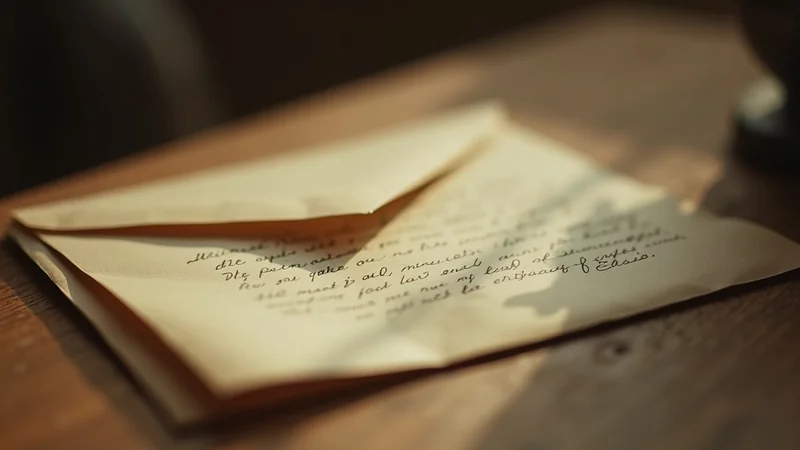
II. The first letter.
Her birthday was October fourteenth. He knew this because she had told him, on their second date, when she had been turning twenty-three. He had not, in November of 2000, taken any notes about it. He had simply remembered, the way one remembers things at twenty-three.
He had written the first letter the following October. He had been twenty-four. He had drafted it three times. The final version had been short, perhaps three hundred words. It had wished her a happy twenty-fourth birthday. It had told her, in the small reserved way of a young Vermont man who had been raised by careful parents to be careful with other people’s space, three small ordinary things about his life. It had told her that he hoped she was well.
He had mailed it from the Elmwood Avenue post office to the address on North Champlain Street where she had been living the previous fall. The address had still, at the time, been a working forwarding address. The letter had not come back.
He did not, in the months after, hear from her.
He had written the second letter the following October. He had been twenty-five. The letter had been similar, short, reserved, three ordinary things, the small wish for her wellbeing.
It had not come back. He had not heard from her.
He had written the third letter the following October. Then the fourth. Then the fifth. The address had stopped working in 2004, the letter had come back with a small yellow forwarding-failure sticker. He had spent two weeks tracking down a new address through a small loose network of mutual acquaintances from the Higher Ground years, and he had written letter number six to the new address.
He had continued, in the slow patient annual rhythm of the third week of October, for twenty-three years.
III. The slow rules.
I sat with Henry in a diner on North Avenue in late November of last year, three weeks after Eleanor Worth had finally written him back. He had on him a small black notebook in which he had been keeping, since 2001, the small private record of the letters.
The notebook had twenty-three entries. Each entry recorded the year, the address he had mailed to, and a short three- or four-sentence summary of the small ordinary things he had told her in that year’s letter.
He had given himself, by the small private discipline of a Vermont sales representative who had spent twenty years driving the slow loop of small producer farms, three slow rules.
The first rule was that he would write only on her birthday. Not on his. Not on Valentine’s Day. Not on Christmas. Once a year. The first letter had been the small establishing precedent for the slow annual rhythm. He had not, in twenty-three years, broken it.
The second rule was that he would never, in any of the letters, ask her to write back. He had asked, on the night of November the second, whether he could write to her. She had said yes. He had taken her yes at the small face value of her twenty-two-year-old kindness. He had decided, by his own private and slow estimate, that any further ask, any small implicit pressure, any small expectation, would have been the small violation of the original yes. The letters had to be, by their small available shape, gifts. Gifts were not, in his private definition, things one asked for receipts on.
The third rule was that he would never, in any of the letters, tell her about any romantic life he had, or had not, in any of the intervening years.
He had told her, instead, three small ordinary things each year. A small particular farm he had visited in the Kingdom. A small particular book he had read. A small particular small concrete thing about the slow Vermont weather. The letters were, by the small private decision he had made in October of 2001 and held to for twenty-three Octobers, small accurate snapshots of the slow accumulated life of one specific man, sent annually to a small specific woman, with no expectation of any reply.
He had also, by his own private description in the diner on North Avenue, fallen out of being in love with her, in the small usual sense, at some uncertain point around the eighth or ninth letter. The letters had become, by his own honest admission, a small different thing by then. They had become the slow available shape of a small commitment he had made to himself, the small commitment to be the kind of person who, having said in November of 2000 that he was going to do a thing, kept doing the thing.
IV. Eleanor.
I sat with Eleanor Worth at a small bakery on College Street in Burlington in early December, six weeks after she had written him back. She was forty-six. She had spent the twenty-three years since November of 2000 in the slow careful work of becoming the woman the twenty-two-year-old Eleanor had needed to become. She had finished, in 2003, the small art-history degree she had been on the slow second pass of when she had met Henry. She had moved to Boston in 2004 for a small graduate program. She had married a man named Conor Worth in 2007, kept his last name through and beyond the slow careful end of the marriage in 2018, and returned to Vermont in 2019 to take a curatorial position at the Shelburne Museum south of Burlington. She had a small daughter from the marriage, who was, by then, fourteen.
She had received every one of Henry’s twenty-three letters. She had kept them all.
She had kept them, by her own honest admission, in a small wooden box in the closet of her bedroom. The box had moved with her through five small apartments and one careful marriage. She had read each letter once, in the slow uncomplicated way of a woman receiving a small accurate snapshot from a man she had once briefly known. She had not, in twenty-three Octobers, written back.
She had not written back, by her own honest description, for the slow accumulated reason that she had not, in any of the twenty-three years, been the woman the letters were quietly addressed to.
The letters had been addressed, by Henry’s slow patient annual practice, to the Eleanor who had stood next to him on the small cold sidewalk on Pine Street in September of 2000. That Eleanor had been, by November of the same year, already in the slow process of becoming a different person. By 2004, she had been a graduate student. By 2007, she had been a wife. By 2018, she had been the slow available mother of a small careful daughter, and a woman in the middle of ending a marriage in the patient gentle way that the slow ends of careful marriages sometimes get ended.
She had been, in 2024, almost none of the things the twenty-two-year-old Eleanor had been. She had also been, by the slow uncomplicated arithmetic of her own honest sense of herself, mostly happy.
She had been, every October, slightly puzzled and slightly moved by the letters. She had not, by any practical accounting, known what to write back. The Eleanor the letters had been addressed to was not, by her own honest internal review, the woman receiving them.
What had changed in October of the twenty-fourth year was not, by her own description, in her. What had changed was that the letter that had arrived that October had been different.
V. The twenty-fourth letter.
The letter had arrived in her small mailbox on Spring Street on the second-to-last Friday of October. The envelope, like all the others, had been the small plain white kind he had been using since 2002. The address, like all the others, had been written in the small reserved blue-ink hand she had been recognizing since 2001.
She had opened it that evening in her small kitchen with a small cup of tea.
The letter had been longer than the previous twenty-three. It had been about four hundred and fifty words. It had wished her, in the small steady way, a happy forty-sixth birthday. It had told her three small ordinary things, in the small format he had been holding to for twenty-three years. It had told her, then, that this letter was the last one.
He had written, in the small reserved way of a man who had been thinking carefully about the wording for months: I want you to know that this is not because I have stopped wishing you well. I will, by the simple fact of having spent twenty-three years writing to you once a year, continue to wish you well for the rest of my life. I am writing this last letter because I have realized, in the slow private accounting of my own life over the past year, that the small annual ritual has begun to function, for me, not for you, as a small substitute for the slow available work of being more carefully present in my own daily life. I have been a small careful Vermont bachelor for forty-eight years. I have been, in the small honest part of my private mind, slightly more available to the imagined Eleanor of October fourteenth than I have been to the slow available people of the other three hundred and sixty-four days of my own slow available year. This is, by my own honest admission to myself, not the fault of you. It is the fault of me. I have decided, by the slow private decision of October the eighth of this year, to stop. I am writing this last letter to tell you that I am stopping, because if I simply stopped without telling you, you would not have, by the small particular nature of our small particular arrangement, any way of knowing why the letter had not come. I want you to have a way of knowing. I want you, also, to have the freedom, by the small available knowledge that no more letter will arrive, of forgetting about me with whatever gentle ease you can find.
He had signed it, the way he had signed all twenty-three previous letters: With my warmest wishes for the year ahead. H.
Eleanor read it three times.
She made herself a second cup of tea. She sat at the small kitchen table for almost an hour without doing anything else. She thought about the small wooden box in the closet of her bedroom, which held (by the small private inventory she had taken over the years) twenty-three small reserved blue-ink letters and the small accumulated weight of a slow patient annual ritual she had, until that Friday evening, allowed herself to receive in the small uncomplicated way of a woman who had been receiving them without having to do anything about them.
She had not, in any of the twenty-three previous Octobers, faced the small specific moment of the ritual ending.
She thought about her own life. She thought about the slow careful end of her marriage in 2018. She thought about her daughter, who was at her father’s apartment that weekend. She thought about the small slow patience of the years she had been back in Vermont, and the slow gentle solitary shape they had taken, and the small specific honest fact that she had not, in any of those years, allowed herself to consider what it would feel like if the letters from Henry Pellerin stopped.
She decided, by the small slow patience of an hour at her own kitchen table, to write back.
Some long quiet rituals are only ever honestly tested by the moment of their announced end.
VI. The reply.
She wrote her reply that Saturday morning. She drafted it twice. The final version was about three hundred words. She did not, by her own honest description in our conversation in December, write it in any dramatic way.
She told him that she had received every letter. She told him that she had kept them all, in a small wooden box. She told him that she had read each one. She told him that she had not, in twenty-three Octobers, written back for the slow honest reason that the Eleanor the letters had been quietly addressed to had not, in any of those years, been the woman receiving them, and that she had not known how to write back as the woman she had actually become.
She told him, then, that she had been moved, in a way she had not expected, by the twenty-fourth letter. She told him that the small clear honesty of his decision to stop had been, by her honest reading, the first letter in twenty-four years that had been written by the forty-eight-year-old Henry to the forty-six-year-old Eleanor, rather than by the twenty-four-year-old Henry to the twenty-two-year-old Eleanor. She told him that she had read it three times, and that she had decided, by the slow patient hour at her own kitchen table on a Friday evening, to write back as a forty-six-year-old woman to a forty-eight-year-old man.
She told him that she was, by her own honest internal review, a small different person from the woman he had once briefly known.
She told him that she would like, if he would be willing, to meet for coffee some afternoon in the next several weeks. Not because she was, by her own gentle careful explicit clarification, proposing any kind of small specific outcome. Simply because she had, in the slow careful course of an hour at her own kitchen table, decided that she would like to meet the man who had written the twenty-fourth letter.
She mailed the reply on Saturday afternoon from the same small Elmwood Avenue post office he had been mailing his own letters from for twenty-three years.
He received it on Tuesday.
VII. The small coffee.
They met for coffee on a Wednesday afternoon in November at a small place on Church Street called Speeder & Earl’s. They had agreed, by short small subsequent email exchange, to meet at three. He had arrived at two-fifty. She had arrived at three-oh-three.
They had not seen each other in twenty-four years.
He recognized her the way one recognizes a face one has been imagining annually for a long time, by the slow accumulated similarity of an older face to a younger one. She did not, by her own honest description in our conversation in December, recognize him at first. She had seen the small reserved blue-ink handwriting of him for twenty-three years, but she had not seen the face. The face, by her honest description, was a face she had to slowly reassemble in the small first ninety seconds of their meeting, the way one reassembles a face one has not seen since the age of twenty-two when one is now forty-six.
They sat at a small table near the back. They ordered two coffees. They sat across from each other for almost three hours.
I am not, by their gentle mutual permission, going to describe the specific shape of the three-hour conversation. They have told me that it was, in their honest joint description, the conversation of two adults who had, by small slow separate paths, arrived at the small available curiosity of finding out who each of them had become. They have told me, by gentle careful clarification, that the conversation was not, by either of their honest descriptions, the small obvious romantic restoration that the popular American shape of this kind of story sometimes wants it to be.
It was, instead, the small slow honest beginning of what has, in the eleven months since, become a small steady friendship.
They have, in the eleven months, met for coffee fourteen times. They have met for dinner, with Eleanor’s daughter, twice. They have met for a small slow weekend hike, in the careful November light of the Worcester Range, once. They are not (by either of their honest descriptions, and by the small explicit gentle agreement they reached at the end of the second coffee) in any sense in a romantic relationship.
They have, instead, by the slow patient available work of two careful adults who have arrived in their late forties with the slow accumulated honesty that careful late forties sometimes brings, become modest, deliberate friends.
VIII. Why it stays.
I sat with Henry and Eleanor together for the last hour of our conversations in mid-December, at a small place on Pine Street called Penny Cluse Café that had not, in fact, existed in November of 2000, that had opened in 2002, in the small new shape of a Burlington that had been slowly becoming, in the twenty-three years since their initial small autumn meeting, a slightly different Burlington than the one they had each separately remembered.
They did not, in the small joint conversation, characterize the twenty-three years of letters as a slow loss or a small wasted ritual. They characterized them, by Eleanor’s gentle slow description, as a small particular kind of slow careful tribute. Henry had spent twenty-three years addressing letters to a woman who no longer, by any usual sense, existed. Eleanor had spent twenty-three years receiving letters from a man who had been, for those twenty-three years, slowly evolving in his own slow private parallel into the man who, in October of the twenty-fourth year, had finally written a letter from his actual self to her actual self.
The letters, by the small joint reading of the two of them in late 2024, had been the slow careful necessary infrastructure of two slow patient people figuring out, in their own separate slow ways, who each of them was going to turn out to be.
Some long letters of small accumulated patience are only ever, in the slow honest arithmetic of careful adult life, the slow available scaffolding of a friendship that takes a quarter of a century to become possible.
Across the United States, in small post offices and small mailboxes and small wooden boxes on the top shelves of bedroom closets, the slow patient annual rituals of quiet, unhurried Americans are still slowly accumulating their small particular weight. Most of these rituals will, in any usual sense, never produce a reply. A very small handful of them, in the small twenty-fourth year of a slow patient practice, will. For broader context on the long American tradition of small handwritten correspondence and slow careful intimacy at distance, readers can spend time with the literary archives at the Library of Congress or the long-form material at the Smithsonian Magazine. The Chapbook keeps its narratives clean, human, and responsible, read more in the Editorial Policy.
The small black notebook in which Henry has been recording his twenty-three letters is, by his gentle private decision in November of last year, retired. He has placed it on the small bookshelf in his small Burlington apartment, beside a small framed photograph of his late mother. He does not, by his own count description, expect to write in it again.
The small wooden box in the closet of Eleanor’s bedroom is, by her gentle private decision in November, still where it has always been. It still contains the twenty-three letters. It now also contains, by her quiet recent addition, a small handwritten note from December, the first short note she has herself written to Henry since the small autumn of 2000.
The note says only: I am glad to know you., E.
She has not, by her gentle private description, made any decision yet about whether to keep adding to the box.
She is, by her own honest admission, in no particular hurry.