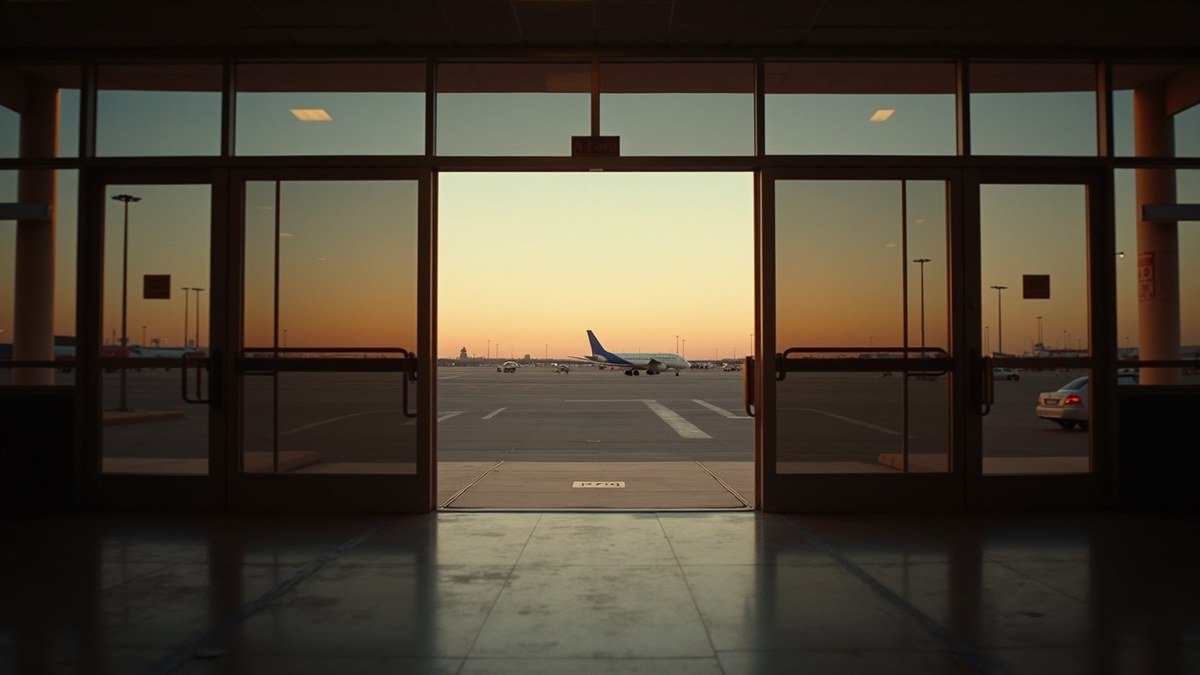
They had talked for forty-six minutes at Gate B12. Eleven years later, she walked into his bookstore.
The flight from Dallas-Fort Worth to Albuquerque had been delayed three times on the evening of November the fourteenth, two thousand and fourteen. The first delay had been the standard hour-and-a-half mechanical, which had become a two-hour mechanical by seven-fifteen. The second delay, at nine, had been weather, a fast-moving cold front through the New Mexico desert that had grounded everything heading west. By ten-thirty, when the gate agent had announced the third delay, most of the passengers at Gate B12 had given up the careful air of patience that travelers maintain in the early stages of a problem and had begun the slow uglier work of resigning themselves to a long wait.
Elena Morales had been one of the resigned. She had been twenty-six. She had been on her way home to Albuquerque for her grandfather’s eighty-fifth birthday party, which was scheduled for the following afternoon at her aunt’s house in the South Valley, and which she had been promising her family she would attend for three months. She had been a second-year graduate student at the University of Texas at Austin, in the English literature program, and she had been carrying, in her dark blue canvas tote bag, three paperback novels and a half-eaten bag of pretzels from the airport newsstand.
She had been reading one of the paperbacks, The Stories of John Cheever, a thick Vintage edition with a cracked spine, when the man had sat down two seats over and pulled the same book out of his backpack.
She had looked at him sideways. He had looked at her sideways. They had both, at the same moment, started to laugh.
“That is a long delay,” he had said.
“It is,” she had said.
“What story are you on?”
“The Five-Forty-Eight.”
“That is one of the best ones.”
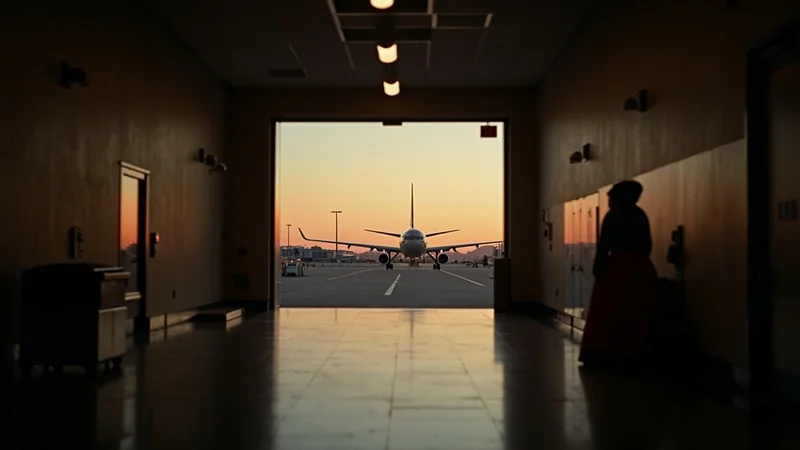
II. The conversation.
His name had been Daniel Carrington. He had been twenty-eight. He had been on his way home to Albuquerque from a job interview in Dallas at a small architectural lighting firm, which he had told her about with the careful self-deprecating tone of a man who had not been sure he wanted the job and was almost relieved to be flying back without it. He had grown up in the Northeast Heights neighborhood of Albuquerque. He had a degree in industrial design from the Rhode Island School of Design. He had been, at twenty-eight, in the slow middle of figuring out what he actually wanted to do for the next thirty years.
They had talked for forty-six minutes. The conversation had been about Cheever first, then about the writers Cheever had liked, then about Daniel’s two younger sisters in Albuquerque, then about Elena’s grandfather’s eighty-fifth birthday, then about the kind of small careful things two people talk about when they have realized, in the first fifteen minutes, that they are going to be sorry to stop talking.
At eleven-eighteen, the gate agent had announced that the flight was finally boarding. They had boarded. They had not, by the small unspoken arithmetic of the seating chart, been near each other on the plane. Daniel had been in row six. Elena had been in row twenty-two. They had landed in Albuquerque at one-twenty in the morning. They had not exchanged numbers at the gate. They had not exchanged numbers on the plane. They had not, in the small soft chaos of the baggage claim at one-forty-five, located each other.
She had thought about him, on and off, for almost three weeks. She had assumed she would never see him again. She had been twenty-six. She had not yet learned how often the universe quietly returns the things it has briefly shown you.
III. Eleven years.
I am writing about Elena and Daniel because their story is, on its face, the kind of story magazines like to publish in the soft pink language of fated romance, and because the actual story (the careful eleven-year story that connected the airport conversation to the bookstore in Austin) is more interesting than the soft pink version, and worth writing carefully.
Eleven years passed.
Elena finished her master’s. She finished her PhD. She moved to Austin permanently in 2018 for a teaching post at a small private university, which she held for four years before deciding, slowly and after considerable internal arithmetic, that the academic life was not the life she had been meaning to build. She left the university in 2022. She took a position as the director of programming at a small literary nonprofit in East Austin. She lived in a small bungalow on East Cesar Chavez. She had a cat named Cheever. She had not, in eleven years, married. She had, in those eleven years, dated three men carefully and one woman briefly. She had, by the time the bookstore happened, become the kind of person who had, mostly, made peace with the small quiet shape of her own life.
Daniel did not take the lighting design job in Dallas. He moved to Austin, in 2015, on a small careful impulse he could not, even later, fully account for. He took a job at a furniture design studio. He worked there for four years. He saved money. In 2019, he and a friend from RISD opened a small independent bookstore in the Cherrywood neighborhood on the east side of Austin. The bookstore was called Carrington & Beam. It specialized in twentieth-century American fiction, small-press poetry, and architecture monographs. It was, by 2025, eleven years after the airport, one of the most beloved small bookstores in the city.
Daniel did not, in those eleven years, marry. He had been in a long careful relationship with a woman named Beatrice from 2017 to 2021, which had ended kindly and which had left him, at thirty-five, with the small careful melancholy that long-ended kind relationships leave. He had, in the year before the bookstore happened, begun to think about whether he was going to be the kind of man who was, at forty, still on his own.
He had not, in eleven years, forgotten the woman who had read Cheever beside him at Gate B12.
He had also not, in eleven years, gone looking for her. He had not known her last name. He had not known where in Albuquerque she had grown up. He had only known her first name, Elena, and the small particular way she had smiled when she had told him the title of the Cheever story she had been reading.
IV. The bookstore.
It was a Tuesday afternoon in late September. Elena had a long-planned literary event to organize for her nonprofit in early October, which involved booking a small selection of Texas-based novelists and pairing them with appropriate venues. The nonprofit’s intern had suggested, after a brief Google search the previous week, that they meet with the owners of Carrington & Beam in Cherrywood, who were known to be receptive to small reading events and who had a back room that could accommodate fifty people. Elena had emailed. The owner had emailed back. They had set up a meeting for three in the afternoon on the Tuesday in question.
She had not, in any way, expected the owner to be Daniel.
She walked in at three. The bookstore was the small particular kind of small bookstore that has been carefully arranged by a person with strong opinions, high wooden shelves to the ceiling, a long center table with carefully selected staff picks, a small reading nook in the back with two armchairs and a single lamp. There was a man behind the counter sorting receipts. He looked up.
He had grown a careful short beard since 2014. His hair was a little shorter. He was wearing a navy blue button-down. But he was, in the unmistakable way that the people we have spent forty-six minutes carefully observing remain unmistakable, the man from the gate at DFW.
He looked at her. He looked down at his receipts. He looked at her again. He set the receipts down very carefully.
“Cheever,” he said.
She nodded. She did not, in the moment, trust herself to speak.
“Elena,” he said.
“Daniel,” she said.
V. The conversation behind the conversation.
They sat in the small reading nook at the back of the bookstore for almost an hour and a half before either of them said anything about the event. The store was, that afternoon, mostly empty. Daniel’s business partner Beam was off, he worked Thursdays through Sundays, Daniel worked Tuesdays through Saturdays, and the store had a small loyal Tuesday afternoon clientele that did not, that day, materialize beyond two retirees who knew exactly which section they wanted and left within fifteen minutes.
They told each other the eleven years.
She told him about the master’s, the PhD, the small careful realization in 2022 that the academic life was not, in the end, the life she had been meaning to build. He told her about the lighting design job he had not taken, the move to Austin in 2015, the long relationship with Beatrice that had ended kindly in 2021. They told each other about the cats, his small black cat Bishop, her gray tabby Cheever, named in 2017 in a small private homage to a conversation she had assumed would never have a second chapter.
She did not, in the conversation, ask why he had moved to Austin in 2015. She did not need to. The question was hanging quietly in the space between them, and they were both, in the careful adult way they had each become, deciding whether to answer it directly.
Some questions in long lives are best asked sideways, in the way one asks a wild bird at a window.
Daniel asked her, near the end of the hour and a half, what she was reading now. She told him she was halfway through Elizabeth Hardwick’s Sleepless Nights. He told her he had just finished Sleepless Nights three weeks earlier. They both laughed at the small absurdity of the coincidence. It was not, of course, much of a coincidence. They had been, for eleven years, the same kind of careful slow American reader. They were always going to be reading the same books, six months apart, with the small steady gravity of two people whose taste in writers had been calibrated, in part, by forty-six minutes at a delayed flight gate eleven years earlier.
She did not, that afternoon, book the event. They agreed she would come back the following week. She left the bookstore at five-fifteen. She walked the six blocks to her car in the soft September Austin light, with the careful steady weather of a woman whose afternoon had quietly handed her a question she had not been expecting to be asked.
VI. The careful five months.
I am writing this story in the slow honest way the story actually happened, because I have come to believe that the worst thing a magazine like The Chapbook can do is to compress eleven years of careful living into a single sentimental afternoon.
Elena did come back the following week. They did book the event. They had, in the planning of the event, three further meetings at the bookstore over the next three weeks. The meetings ran longer than they needed to. The meetings began to acquire small adjacent rituals, a coffee from the small place on the corner before the meeting, a walk around the block after the meeting, a small slow lingering at the front door of the bookstore that neither of them was quite ready to abbreviate.
In late October, after the literary event itself had gone well, Daniel asked Elena to dinner.
She said yes.
They went to dinner on a Sunday evening at a small Italian restaurant in East Austin. They sat at a corner table by the window. They had a long careful conversation that did not, in any obvious way, address the eleven years between Cheever and Carrington & Beam. They talked about books. They talked about their families. They talked about the small careful question of what Elena was going to do with her literary nonprofit in the next two years, and the small careful question of whether Daniel was going to expand the bookstore into the empty unit next door that had opened up in September.
At the end of dinner, in the small parking lot behind the restaurant, in the careful way of two people who had known each other for eleven years and one month, they kissed.
It was a long careful kiss. It was not, in any obvious way, dramatic. It was the kiss of two people who had been quietly carrying around the possibility of it for a very long time and who had decided, on a Sunday in October in Austin, that they were ready to set the possibility down.
VII. The Cheever.
I sat with Elena and Daniel at the small bookstore in Cherrywood on a Saturday in March, about five months after the dinner. The store was, that afternoon, the small busy Saturday version of itself. Beam was at the counter. A small group of regulars was at the reading table in front. Daniel was restocking the poetry section. Elena was in the back reading nook with a cup of coffee from the place on the corner.
She showed me, on the small shelf behind the reading nook, a thick Vintage edition of The Stories of John Cheever. The spine was cracked. The corner of page 217 (the first page of “The Five-Forty-Eight”) was folded over carefully. The book was, by Daniel’s careful private confession, the same copy he had been reading at Gate B12 in 2014. He had kept it. He had moved it from Austin apartment to Austin apartment for eleven years. He had not, he told me, ever consciously thought of the book as a memorial. He had, in his honest accounting, just liked the book.
Elena had brought her own copy, also Vintage, also cracked-spined, to the bookstore on the second meeting in October. They had not, at that meeting, compared editions. They had compared them in November, on a quiet evening in his apartment, in the modest, deliberate way that two readers compare the same edition of the same book when they have realized they have been reading it side by side, separately, for over a decade.
The two copies were now, by Elena’s careful private decision, on the small shelf behind the reading nook of the bookstore, kept together with a small ribbon she had tied around them.
She did not, when she showed me the shelf, say anything sentimental. She let me look. She let me draw my own conclusions.
VIII. Why it stays.
I have been writing for The Chapbook for almost nine years, and the stories I have learned to write most carefully are the stories where the romantic conclusion is not the point of the story. The romantic conclusion of Elena and Daniel (they are engaged as of last month, and they are planning, this June, a quiet, unhurried wedding in the back yard of Daniel’s parents' house in Albuquerque) is, in a sense, the smallest and least interesting part of the eleven-year story I have been describing.
The interesting part is the eleven years.
The interesting part is that two careful slow American readers, who had spent forty-six minutes at a delayed flight gate at DFW in 2014, had each gone on, separately and quietly, to build a careful slow American life. They had not searched for each other. They had not done the things magazines write about, the small dramatic gestures of looking up airline manifests, of posting Craigslist missed connections, of flying to Albuquerque and asking the bartenders of Old Town if anyone knew a girl named Elena who read Cheever. They had, instead, each lived their own life. They had read their own books. They had loved their own people. They had built their own work. They had become, over eleven years, the kind of people who could, on a Tuesday afternoon in September, walk into a bookstore and recognize each other and be ready, finally, for what had been quietly possible all along.
Across the United States, in delayed flight gates and small bookstores and slow careful long-running parallel lives, the small possible love stories of strangers are quietly waiting to be picked back up at the moment their slow living has made them livable. For broader context on the long careful work of American twentieth-century fiction, readers can spend time with the literary archives at the Library of Congress or the long-form reporting at the Smithsonian Magazine. The Chapbook keeps its narratives clean, human, and responsible, read more in the Editorial Policy.
The wedding is on a Saturday in June. Daniel has asked his two sisters to be in it. Elena has asked her aunt from the South Valley, in whose back yard her grandfather’s eighty-fifth birthday party had been held in 2014, to give the neat, patient reading at the ceremony. The reading, by Elena’s own careful choice, will be the closing paragraph of “The Five-Forty-Eight.”
She did not, she told me, choose that paragraph for any reason other than that it has always been her favorite. She was twenty-six when she first underlined it. She is thirty-seven now. The pencil mark is still there, slightly fainter, on page 230 of her cracked-spined Vintage edition. The book sits, with Daniel’s copy, on the small shelf behind the reading nook of the bookstore in Cherrywood.
The eleven years, in the end, are the love story. The wedding is just the small ceremonial closing of it.