His uncle had died eleven years earlier. The padlock on the garage had not been opened since.
The property on Forty-Seventh Avenue East in Duluth had belonged to Jonas Brennan’s uncle Edmund since 1979. Edmund had lived alone in the small wood-frame house for thirty-four years, in the quiet private way that confirmed older bachelors in Lake Superior cities sometimes live, and he had died in February of 2014 at the age of seventy-six, in the bedroom on the second floor where he had slept every night since 1981. He had left the entire property (house, garage, and the half-acre of birch and pine that climbed up the hill behind the back door) to his nephew Jonas, who had been the only family member to visit him regularly in the last twelve years of his life.
Jonas had been forty-one at the time. He was forty-three now, on the morning the story I am writing about properly comes to its end.
He had not, in the eleven years since inheriting the property, sold it. He had not lived in it either. He lived a hundred and forty miles to the south, in a small house in Hinckley, where his wife Beth taught third grade and he ran a one-man surveying business that took him, in the slow Minnesota rhythm of independent surveying work, all over the state. The Duluth property had become, in the eleven years since Edmund’s death, the kind of inherited weight that quietly hangs over the families of people who cannot, for various small reasons, bring themselves to do anything decisive.
He had visited perhaps three times a year. He had paid the property tax. He had let the lawn grow wild around the house. He had not, in eleven years, opened the small wooden garage at the back of the property.
The garage had been padlocked when Edmund had died. The padlock had been on it, by family memory, since approximately 1986. Edmund had owned a small set of woodworking tools, which he had kept in the basement of the house, and he had owned a 1972 Chevrolet Impala, which he had kept in the driveway. The garage, by every family understanding, had been used by Edmund as storage for things he had not, in the long decades of his confirmed bachelorhood, wanted to look at every day.
Jonas had assumed, in the eleven years since the funeral, that the garage contained nothing of consequence. He had assumed this in the incomplete way that nephews sometimes assume things about uncles. He had not, in those eleven years, done the small work of finding out whether the assumption was correct.
II. The decision to open it.
It was Beth, finally, who decided.
She had been patient about the Duluth property for eleven years. She had been the kind of patient that Minnesotan wives sometimes are about the inherited weights of their husbands, visible, supportive, quietly not pressuring. But in the early fall of the year I am writing about, she had begun, in the slow way that women in their forties sometimes do, to suggest that perhaps eleven years had been long enough. The property tax had gone up. The roof on the small house, by the report Jonas had received from a contractor in August, was going to need to be replaced within two years. The inherited weight had begun to convert itself, by the cold arithmetic of the Minnesota real-estate market, into the kind of weight that would, sooner or later, require a decision.
She did not push him to sell. She asked him a quiet question one evening at the kitchen table in Hinckley over a simple dinner.
“Jonas,” she said. “Have you ever opened the garage?”
He set down his fork.
“No,” he said.
“Maybe this is the year for it.”
He agreed.
III. The padlock.
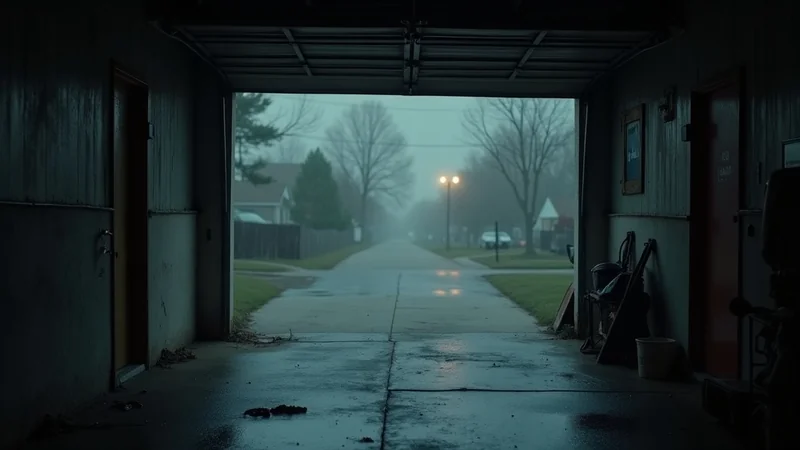
He drove up to Duluth on a Saturday in late October. The Minnesota fall had begun its long work on the birch and pine on the hill behind the house. The lawn around the house was a sea of yellow leaves. He had brought, in the back of his small truck, a set of bolt cutters and a collection of contractor-grade plastic bins.
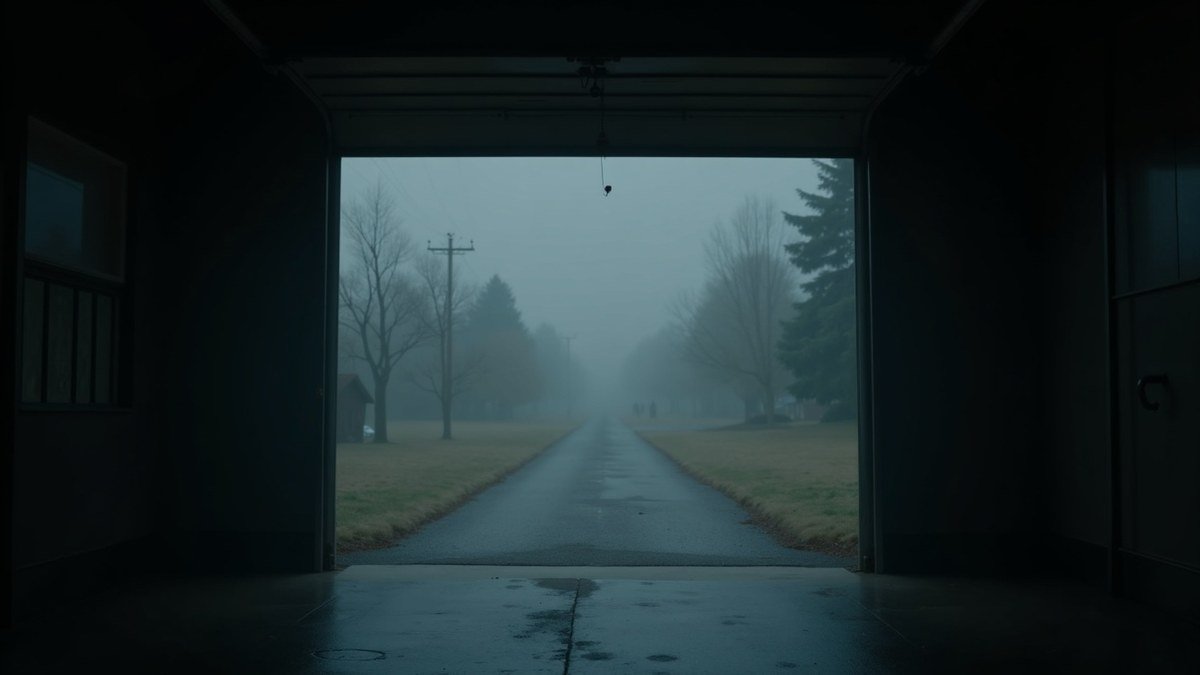
The padlock was an old Master Lock, rusted but solid. He worked at it for almost four minutes with the bolt cutters before the steel finally gave. He pulled the padlock off. He set it on the frozen ground. He pulled the hasp open. He pulled the garage door up on its hinges.
The garage was full.
It was full in the particular way that the storage spaces of confirmed bachelors are full, slow accumulation, organized in an incomplete way, with the logic that had made sense to one man and that did not, to any subsequent visitor, make immediate sense.
There was an old workbench against the back wall. There were two metal filing cabinets against the left wall. There were stacks of cardboard boxes, with pencil labels in his uncle’s hand, along the right wall. There was, in the center of the garage, a 1968 Ford pickup truck, dust-covered, with two flat tires and a set of Iowa license plates that Jonas had not, by any family memory, ever known his uncle to own.
He stood in the doorway for a long moment.
He had not, in any family understanding, known his uncle had owned a second vehicle.
He had not, in any family understanding, known his uncle had ever lived in Iowa.
IV. The filing cabinets.
He opened the left filing cabinet first.
It was full of files in alphabetical order. The labels, in his uncle’s blue-ink hand, were the labels of a methodical record-keeping man, Insurance, Mortgage, Property Tax, Receipts, the small documentary infrastructure of a private American life.
The right cabinet was different.
It contained, in alphabetical order, a set of files with labels that did not match the infrastructure of the left cabinet. The labels read, in small blue-ink handwriting: Hinckley · 1979. Cedar Rapids · 1976. Davenport · 1977. Council Bluffs · 1978. Madison · 1975. The files were thin. Each one contained, by his initial check, only one or two pieces of paper.
He took out the first file. Hinckley · 1979.
The single piece of paper inside was a newspaper clipping from the Pine City Pioneer, dated July eighteenth, nineteen seventy-nine. The clipping described a house fire on a country road outside Hinckley. The fire had destroyed a small farmhouse and had taken the life of a woman who had been alone in the house at the time. The woman, the clipping said, had been a seventy-one-year-old widow named Margaret Petrie. The fire had been ruled an accident, a kitchen-stove fire that had spread before the woman, who had been slow on her feet, had been able to escape.
The Petrie name meant nothing to Jonas.
He took out the second file. Cedar Rapids · 1976. The single piece of paper inside was a clipping from the Cedar Rapids Gazette, dated September of nineteen seventy-six. The clipping described a house fire on a residential street in Cedar Rapids that had destroyed a small bungalow and had taken the life of a woman named Helen Bjornstad, aged sixty-eight, a widow who had lived alone for sixteen years.
He took out the third file. The pattern repeated. The pattern repeated for every file in the right cabinet.
Five files. Five house fires. Five older widows in five different states, in five different years between nineteen seventy-five and nineteen seventy-nine. All accidents. All single-fatality. All older women living alone.
He sat down on the concrete floor of the garage. He held the five files in his hands. The Minnesota afternoon had begun to turn into early evening.
V. What Edmund had been.
The hardest moments in the inheritance of a family are the moments when the inherited weight turns out to be something one had not, in any family conversation, ever been warned about.
He sat in the garage until almost six o’clock. He did not, in the dusk, immediately call anyone. He did the slow work of looking, one more time, at the five files. He looked at the Iowa license plates on the 1968 Ford pickup. He looked at the workbench. He looked at the cardboard boxes along the right wall.
He did not open any of the cardboard boxes. He understood, in the private way that adult men sometimes understand things, that the boxes would contain whatever the filing cabinets had begun to suggest, and that the filing cabinets had begun to suggest enough.
He closed the right cabinet. He left it unlocked. He walked out of the garage. He pulled the door down on its hinges. He did not, in the Minnesota evening, put any new padlock on the hasp.
He drove back to Hinckley that night. He arrived at Beth’s kitchen table at almost eleven o’clock. She had waited up. She made him a cup of tea. He sat across from her at the table and he told her, in the slow way he had rehearsed on the long drive south, what he had found.
She listened without interrupting. She did not, in the way she had not, in the eleven years they had been married, ever offered Jonas any unsolicited advice, offer any now. She held his hand across the table. She let him talk. She waited until he had finished.
“Jonas,” she said. “We have to call someone.”
“I know.”
“Tonight.”
“Yes.”
He called the non-emergency line of the St. Louis County Sheriff’s Department at eleven-thirty. He explained, in the slow way he had developed during the drive, what he had found in the garage of his uncle’s inherited property. The deputy on the line listened. The deputy took his name. The deputy told him that someone would be at his house in Hinckley by the morning.
VI. The two detectives.
They arrived at nine. The older of the two, a woman in her fifties named Detective Lindgren, was, by the way she carried her clipboard, a long-serving detective who had been doing this work for many years. The younger, a man in his thirties named Detective Wheeler, had the alertness of a detective in the early years of a career.
They sat with Jonas at the kitchen table in Hinckley. They drank coffee. They listened to him tell the story he had told Beth the night before.
Detective Lindgren did not, by any sign, react. She had, by every indication, been a detective for a long time, and she had learned, in those years, that stories told by nephews on Sunday mornings were almost always more careful than they were dramatic.
“Mr. Brennan,” she said, when he had finished. “How quickly can you drive us up to Duluth?”
“Now,” he said.
They followed him. He drove. They drove behind him in their unmarked car. He arrived at the Forty-Seventh Avenue East property at twelve-fifteen. He led them to the garage. He pulled up the door. He stood back and let them in.
They worked carefully. They photographed. They cataloged. They opened the cardboard boxes, in the way that detectives do, with gloves and an unhurried pace. They did not, in the afternoon, tell Jonas what they found in the boxes.
At four in the afternoon, Detective Lindgren came out of the garage. She walked over to the place by the back porch where Jonas had been sitting on a folding chair. She sat down on the steps. She looked at him.
“Mr. Brennan,” she said. “We are going to be here for a long time. I think, Jonas, I think you should go home to Hinckley tonight. I think your uncle was a man who did some things between nineteen seventy-five and nineteen seventy-nine that the law-enforcement community in five states never, in any sense, properly investigated. I am not going to tell you what we have found in those boxes. I am going to ask you to drive home to your wife and to give us a number where we can reach you in the next several days.”
She paused. She looked at him.
“You did the right thing, calling us,” she said. “I want you to know that.”
VII. The long months.
I am going to be careful, in writing the rest of this piece, about what I do and do not say. The Duluth investigation, in the months that followed, has resulted in the opening of five cold cases in five different states. Three of the five, Hinckley, Cedar Rapids, and Council Bluffs, have, by the work of subsequent forensic re-examination of the original case files and the new evidence from the Duluth garage, been quietly reclassified by their respective state authorities from accident to unsolved suspicious death.
The remaining two, Davenport and Madison, are, by the most recent updates Detective Lindgren has provided to Jonas, still under review.
Edmund Brennan (Jonas’s uncle, the confirmed bachelor in the small wood-frame house on Forty-Seventh Avenue East) has, by the work of the five-state investigation, been identified as a person of posthumous interest in all five cases. The Iowa license plates on the 1968 Ford pickup have been traced. The contents of the cardboard boxes have been, by the modern Minnesota state crime laboratory’s evidence-handling protocols, re-examined. The conclusions, by every official sign so far, point in a direction that the Brennan family is, by necessity, still slowly processing.
The houses of the five widows were not random. Edmund Brennan had been, by employment records the detectives have now obtained, an independent insurance adjuster between nineteen seventy-three and nineteen seventy-nine. He had been, in the course of that work, in each of the five small towns where the five fires had taken place. He had, by insurance-company records, been the adjuster on each of the five claims.
The widows had each, by the insurance records, been small policyholders of modest life-insurance policies. The beneficiaries of those policies had been, in each of the five cases, distant cousins or distant nephews who had, by subsequent investigation, not been clearly traceable.
The investigation, by Detective Lindgren’s most recent update to Jonas, is ongoing.
VIII. Why it stays.
I sat with Jonas at the kitchen table in Hinckley in March, almost five months after the Saturday afternoon he had opened the garage in Duluth. He had aged, by every visible sign, in those five months. The Minnesota winter had not been kind. The work of being the nephew of a man who had, by every current indication, been a person Jonas had not, in his forty-three years, ever fully known, had taken its toll on a surveyor who had only ever wanted, in his private life, to be a surveyor.
He did not, in our conversation, speculate beyond the facts. He told me what the detectives had told him. He told me, with the precision of a surveyor, what he had seen in the garage on the Saturday afternoon. He did not, by any sign, attempt to characterize his uncle beyond the record.
Beth sat with us for part of the afternoon. She was, by every sign, the steady weather that Minnesotan wives often are during the worst seasons of their husbands' lives.
The Duluth property has been, by Jonas’s decision in February, donated to the County Historical Society. The Society does not, by his request, intend to make any announcement about the donation until the investigation has, in the way these things do, concluded. The house will be preserved. The garage, by the decision of Detective Lindgren and the district attorney’s office, will be preserved exactly as it was on the Saturday afternoon in October.
Across the United States, in inherited garages and attics and basements that have been padlocked for decades, nephews and nieces and grandchildren are, occasionally, opening doors that have been waiting for them. Most of these doors lead to nothing. A handful of them do not. For broader context on the long history of cold-case investigation in the United States, readers can spend time with the materials at the National Institute of Justice or the long-form reporting at PBS NewsHour. The Chapbook keeps its narratives clean, human, and responsible, read more in the Editorial Policy.
Jonas is forty-four this summer. He still runs the surveying business out of Hinckley. He still visits, by his ongoing practice, the Duluth property approximately twice a year, in the company of a Historical Society representative. He has not, in the eight months since the Saturday afternoon, opened the garage door himself.
The detectives have, by the record, opened it for him.