She had twenty dollars and a borrowed sewing machine. By twenty-four, her label was in three department stores.
The bedroom on Norwood Avenue in southwest Atlanta had been Tiana Booker’s bedroom since she was four years old. Her grandmother’s house was a small brick ranch in the Mozley Park neighborhood, three bedrooms, a small kitchen with the original 1962 cabinets, a sloped back yard where her grandmother had been growing tomatoes and collard greens since 1989. Her grandmother had raised her since 2007, the year her mother had moved to Houston for a job that had not, in any practical sense, ever included sending for her. Her grandmother was sixty-eight. She worked the night shift as a custodian at Grady Memorial Hospital. She had been working the night shift since 2003.
Tiana was seventeen. It was the summer between her junior and senior years at Frederick Douglass High School. She had a small after-school job at a Subway on Cascade Road that paid eight dollars an hour and that her grandmother had approved on the condition that she keep her grades above a 3.5. Her grades were a 3.8. She had been thinking, with the kind of slow patient honesty that some seventeen-year-olds develop when they have been raised by a working grandmother, about what she was going to do after high school.
The twenty dollars was, by her own honest description, the small amount of money she had been allowed to spend on herself out of her last Subway paycheck after she had given her grandmother forty dollars toward the cable bill and put thirty dollars into her small savings account at the credit union on Stewart Avenue.
She had spent the twenty dollars on fabric.
The fabric had been at the small remnant shop on Lee Street, where she had been going on Saturday mornings since she was twelve. The remnant shop sold the small end-of-bolt pieces that the larger fabric stores in north Atlanta could no longer sell, usually two to four yards at a time, almost always at the price of three dollars a yard regardless of the original retail. She had bought, that Saturday in June, three yards of a small dusty terracotta cotton-linen blend, three yards of a small soft cream Pima cotton, and one yard of a small black-and-white striped raw silk that had been marked down to eight dollars because it had a small tear at the bottom corner.
The total, with the small Georgia sales tax, had been nineteen dollars and forty-two cents.
She had walked home with the small folded fabric in a small brown paper bag and the small fifty-eight cents in change in her front pocket.
II. The borrowed machine.
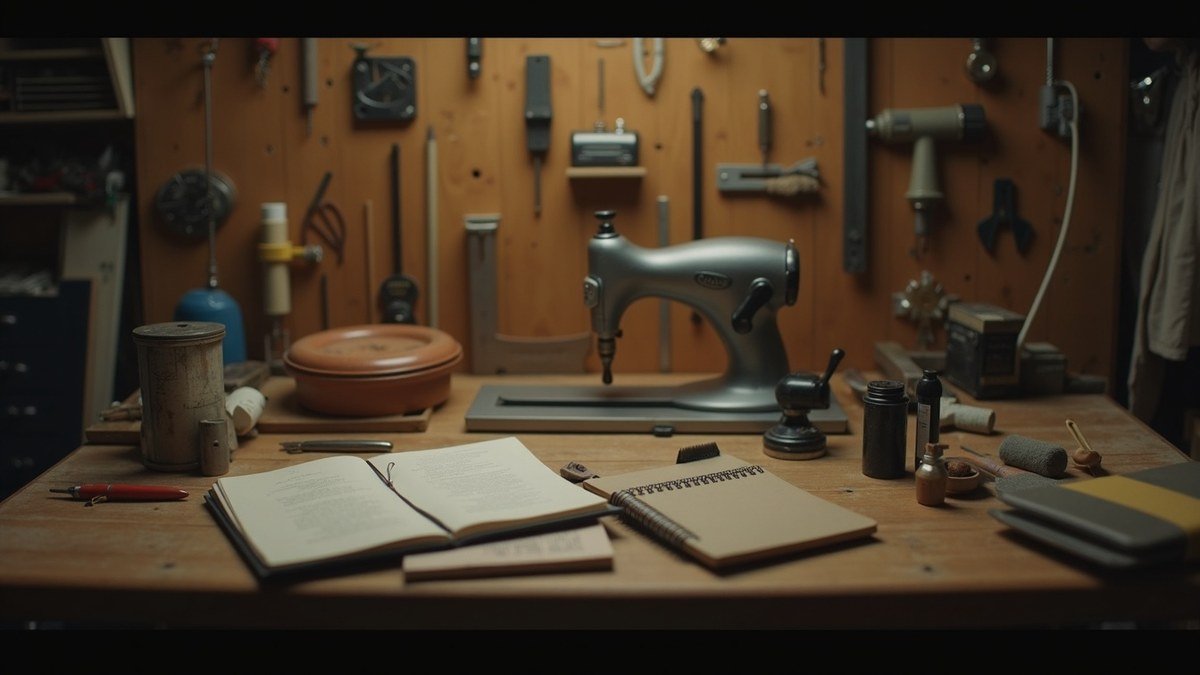
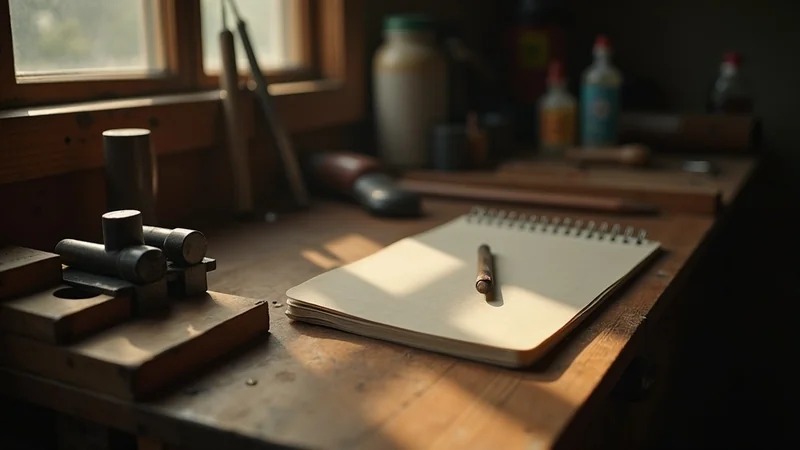
The sewing machine had been borrowed from Mrs. Eleanor Whitfield, who lived four houses down on Norwood Avenue. Mrs. Whitfield was seventy-three. She had been a small home seamstress for almost fifty years and had taught Tiana the small basic operations of a sewing machine over a slow patient series of Saturday afternoon visits between 2018 and 2020, when Tiana had been ten through twelve. The machine was a small Brother CS6000i, the small entry-level computerized model that Mrs. Whitfield had bought in 2014 and that she had, by her gentle insistence in early 2024, lent to Tiana on a small open-ended arrangement when Tiana had begun making her own clothes the previous fall.
Mrs. Whitfield had not, by gentle agreement, charged Tiana anything. She had asked only that Tiana visit her every other Sunday afternoon and show her what she was working on.
Tiana visited. She brought, by gentle Sunday tradition, a small slice of whatever pound cake her grandmother had made that week.
The Sunday after the trip to the remnant shop, Tiana had brought a small sketch to Mrs. Whitfield’s kitchen table. The sketch was the small drawing of a single garment, a small simple wrap dress with a kind of asymmetrical hem, drawn in the pencil of a seventeen-year-old who had been doing small pencil sketches in the back of her geometry notebook for almost two years. She had been planning the dress in the terracotta cotton-linen.
Mrs. Whitfield had looked at the sketch for a long moment.
“Sweetheart,” she said. “This is a very good drawing.”
“Thank you, Mrs. Whitfield.”
“You are not making this for school.”
“No, ma’am.”
“What are you making it for?”
Tiana had not, until that Sunday afternoon, said out loud what she had been thinking. She had been thinking it, in the slow honest quiet way of a seventeen-year-old, for almost four months. She had been thinking it in the small interior way that quiet seventeen-year-olds think about the slow careful possibility of becoming the kind of adult their grandmothers had not, in their own working lives, been allowed to become.
“I want to sell it,” she said.
Mrs. Whitfield nodded slowly. She had been waiting, by her gentle later description in our conversation almost seven years later, for the conversation to arrive.
“Where,” Mrs. Whitfield said carefully.
“Instagram, I think.”
“Tell me your plan.”
III. The plan.
Tiana told her. The plan had three parts.
The first part was that she would make three dresses out of the small fabrics she had bought. She would make them carefully, in the slow patient way Mrs. Whitfield had taught her. She would not, by her honest internal arithmetic, rush them. She would finish them, by her honest estimate, over the next six weeks of summer.
The second part was that she would photograph them. She did not own a camera. She owned a small iPhone SE that her grandmother had bought her for her sixteenth birthday. She would photograph the dresses, by her own count estimate, on a small dress form she did not yet have, in the small natural light of the small front porch of her grandmother’s house, on small Saturday mornings before the heavy summer Atlanta light got bad. She would post the photographs to a small Instagram account she would create. The Instagram account would have, by her private reckoning planning, a name that she had been thinking about for three weeks.
The third part was that she would price the dresses high.
Mrs. Whitfield had paused at this.
“How high, sweetheart?”
“Ninety dollars each.”
“For a dress made of nine dollars of fabric?”
“Yes, ma’am. Because the small price tells the small story. If I price them at twenty dollars, the small story is that they are small homemade dresses by a small high school girl in southwest Atlanta. If I price them at ninety dollars, the small story is that they are small designer pieces by an emerging Black Atlanta designer. The small story is, by every careful reading I have done about how small fashion labels work, the actual product.”
Mrs. Whitfield had looked at her for a long moment.
“Where did you learn this, sweetheart?”
“YouTube, mostly. I have been watching, since November, every long interview with every small Black woman fashion entrepreneur I could find. I have, by my honest internal count, watched about forty hours of them. The thing they all say is that the small price is, by every honest reading, the small story.”
Mrs. Whitfield had been quiet for almost a full minute.
“Sweetheart,” she said. “What is the name of the small Instagram account going to be?”
“Norwood and Lee.”
IV. The summer.
The three dresses took, in the actual practice, almost eight weeks. Tiana worked on them in the slow patient evenings between her Subway shifts. She worked on them at Mrs. Whitfield’s small kitchen table on Saturday mornings, because the small Brother CS6000i lived at Mrs. Whitfield’s house and Tiana had not, by their gentle arrangement, asked to move it. She worked on them with the slow patient kind of careful attention that seventeen-year-olds who have been raised by small working grandmothers sometimes develop.
The first dress (the small terracotta wrap dress with the asymmetrical hem) was finished on the first Saturday of August. The second dress, a small cream Pima cotton shift with small contrast stitching at the collar, was finished on the third Saturday. The third dress, a small black-and-white striped raw silk camp shirt that she had cut from the small one-yard remnant by the slow patient work of careful pattern arrangement around the small tear, was finished on the first Saturday of September.
She photographed them on the front porch of her grandmother’s house on three consecutive Saturday mornings between seven and eight in the morning. She used the small iPhone SE. She used a small homemade dress form she had built from a small wire form she had bought at the small remnant shop for six dollars and that she had padded, by the small instructions of a YouTube tutorial, with a small amount of cotton batting she had paid for out of her Subway tips.
She edited the photographs on her phone. She wrote, by her own slow patient practice, three captions about each dress, about the small fabric, about the small inspiration, about the Black Atlanta neighborhood where she had grown up and where the small brand was being made.
She posted the small terracotta dress on the small new Instagram account @norwoodandlee on the second Tuesday of September, at six in the morning, with the price of ninety dollars and a small link to a small Square checkout she had set up the previous Sunday afternoon.
The dress sold in seven minutes.
V. The first six months.
She had not, by her own arithmetic internal expectation, planned for the dress to sell in seven minutes.
She had planned for the dress to sit, by her own quiet accounting reasonable estimate, for several weeks. She had planned to slowly accumulate a audience for the small new account. She had planned, by her own measure spreadsheet from the previous Saturday afternoon, to sell the three dresses over the course of approximately four months.
The terracotta dress was sold to a woman in her early thirties in Brooklyn, who had a small Instagram account of her own with about six thousand followers and who had, by the small gentle direct message she had sent Tiana that Tuesday morning at six oh-three, been following @norwoodandlee since six oh-one. The buyer’s name was Adaora Okeke. She was a Nigerian-American journalist at a small New York magazine. She had a eye, by every available later evidence, for emerging Black designers.
She had paid the ninety dollars by Square. She had asked Tiana, in the small gentle direct message, for a small shipping address. Tiana had given her her grandmother’s address. The dress had shipped on Wednesday morning from the small Mozley Park post office.
Adaora had received it on Friday. She had posted, on her own small Instagram account on the following Sunday afternoon, a photograph of herself in the dress, with a caption tagging @norwoodandlee and naming Tiana as one to watch in Black Southern fashion design.
The other two dresses sold by Thursday.
The small Instagram account @norwoodandlee had, by the end of that first week, about four thousand followers.
Tiana sat at her grandmother’s kitchen table the following Sunday evening with her small iPhone SE and her grandmother sitting across from her, drinking a small cup of tea. Her grandmother had not, in the small ten days since Tiana had posted the first dress, fully understood what was happening. She had understood, in the small gentle direct way of a Mozley Park grandmother who had been working the night shift at Grady Memorial Hospital for twenty-two years, only that her granddaughter had made three dresses, had sold them online, and now had, by Tiana’s honest careful accounting, two hundred and seventy dollars sitting in a small new business checking account at the credit union on Stewart Avenue.
Her grandmother had looked at her for a long moment.
“Sweetheart,” she had said. “What are you going to do next?”
“I am going to make twelve more dresses.”
“With what money?”
“With the two hundred and seventy dollars.”
Her grandmother had nodded slowly.
“Show me the math,” she had said.
Tiana had shown her the math. The math had been worked out carefully on a small piece of notebook paper. Two hundred and seventy dollars would buy, at the small remnant shop on Lee Street, approximately ninety yards of fabric. Ninety yards of fabric would make, by her own count cutting estimates, between twenty-four and thirty pieces, depending on the cuts. Even at her conservative honest estimate of twelve finished pieces, sold at an average of one hundred and ten dollars each (she was, by her private reckoning internal pricing strategy, going to raise the prices slightly for the next collection) the small return would be approximately one thousand three hundred and twenty dollars.
Her grandmother had read the small piece of notebook paper twice.
“Sweetheart,” she had said. “I am going to ask you something.”
“Yes, ma’am.”
“Is your senior year going to be okay?”
“Yes, ma’am.”
“You are going to graduate?”
“Yes, ma’am.”
“You are going to apply to college?”
“Yes, ma’am.”
“You are going to keep your grades above 3.5?”
“Yes, ma’am.”
Her grandmother had folded the small piece of notebook paper. She had handed it back to Tiana.
“Then I want you,” she had said, “to make twenty-four pieces, not twelve. You said the math goes to twenty-four. I want you to do what the math says.”
VI. The two years after.
I am going to be careful, in writing the next part, about how much I compress. The slow patient careful work that Tiana Booker did between the autumn of her senior year of high school and the spring of her sophomore year at Spelman College is the slow patient work that most fashion-magazine profiles of emerging young designers tend, in the small honest sense, to gloss over. I am not going to gloss it.
She made twenty-four pieces between September and December of her senior year. She sold them. She made forty pieces between January and June. She sold them. She graduated from Frederick Douglass High School in May with a 3.84 GPA. She was admitted, with a small partial merit scholarship, to Spelman College in the fall, in the small Department of Sociology and Anthropology, with a stated minor in entrepreneurship.
She continued, by her own honest small private decision, to work the small remaining hours of the small Subway job through her freshman year. She did this, by her own arithmetic description, not because she needed the money, norwoodandlee by the end of her senior year had generated, by her own quiet accounting spreadsheet, approximately fourteen thousand dollars in revenue, but because she had told her grandmother she would keep the job until she had a stable income from the small new label, and she did not, by her own measure internal accounting, consider the small fluctuating Instagram-driven revenue to be stable yet.
She finally left the Subway in March of her freshman year at Spelman. By then norwoodandlee had grown to about twenty-eight thousand Instagram followers, had been featured in two small online fashion publications, and had been generating, by her own count spreadsheet, between three and five thousand dollars in monthly revenue.
She had also, by then, hired her first employee. The first employee was Mrs. Eleanor Whitfield, who was paid, by gentle arrangement at Mrs. Whitfield’s own gentle insistence, fifteen dollars an hour for approximately ten hours a week of cutting and finishing work. Mrs. Whitfield had not asked for the job. Tiana had asked her. Mrs. Whitfield had accepted on the condition that Tiana also continue to bring her a small slice of whatever pound cake Tiana’s grandmother had made that week.
The arrangement had held.
VII. The department stores.
The moment when norwoodandlee became the small actual brand that the magazine articles in 2023 and 2024 would describe was not, by Tiana’s own honest description, any moment.
It was a slow steady accumulation of moments.
It was the moment in October of her sophomore year at Spelman, when she had been picked up by a small Atlanta-based boutique called Bonafide on Auburn Avenue that had agreed, by gentle arrangement, to carry six of her pieces on consignment.
It was the moment in March of her sophomore year, when a buyer from Nordstrom (a Atlanta-based buyer who had been following her account for almost two years) had reached out by gentle email and had asked for a meeting about a possibility.
It was the moment in June of the same year, when she had signed her first small wholesale contract, a contract for thirty-two pieces, at a wholesale price that worked out to about six hundred and forty dollars per piece, to be sold in the small Nordstrom location at Lenox Square in Buckhead and in two other Nordstrom locations in the Southeast.
It was the moment in December of her junior year, when norwoodandlee had been picked up, by a small subsequent slow patient series of contracts and presentations, by Bloomingdale’s and by a Saks Fifth Avenue capsule program.
Tiana was, by that December, twenty.
She was, by the small accumulated honest spreadsheet of her own slow patient three years, the founder of a small actually profitable American clothing label.
VIII. Why it stays.
I sat with Tiana Booker at her grandmother’s small kitchen table on Norwood Avenue in mid-March of this year, almost seven years after the small Saturday in June of 2018 when she had walked home from the small remnant shop on Lee Street with a small brown paper bag and fifty-eight cents in change. She was twenty-four. She had graduated from Spelman in May with a small bachelor’s degree in sociology and a small certificate in entrepreneurship. She had been running norwoodandlee full-time, with a small staff of four people in addition to Mrs. Whitfield, out of a small studio space she had leased on the West End in 2024.
The small label had been, by her private reckoning spreadsheet in March, on track for approximately one point four million dollars in revenue for the current fiscal year.
She still lived in her grandmother’s house.
Her grandmother had, by Tiana’s gentle insistence in late 2023, finally been able to retire from the small night shift at Grady Memorial Hospital. The retirement had been, by Tiana’s honest description, the thing she had been working toward since approximately the small October of her sophomore year of high school. Her grandmother was now seventy-five. She spent her days, by the gentle new arrangement, in her small back yard with her tomatoes and her collards, and in her small front room with the small steady catalog of library books she had been working through since 2024.
She also, by her own gentle private decision, came down to the small West End studio twice a week to bring small pound cake to Tiana’s staff.
I asked Tiana, at the small kitchen table, what she would tell a small seventeen-year-old version of herself if she could.
She thought about it for almost a full minute.
“I would tell her to do the math on the small piece of notebook paper,” she said. “I would tell her that the small piece of notebook paper, in the slow honest interior of a small Mozley Park kitchen at nine in the evening on a Sunday, is the small actual beginning of the small actual thing. I would tell her that the math will not, by itself, make the small thing happen. But the math is the thing that her grandmother, by every honest reading, was waiting for her to show. The math is the way you let the people who love you understand that you are not, in any small available sense, dreaming. You are, in the way of the math, planning.”
She paused.
“And I would tell her,” she said, “to keep visiting Mrs. Whitfield. Every other Sunday. With the pound cake.”
The slow honest beginning of a small American small-business success story is, almost always, a small piece of notebook paper and a small slice of pound cake and a small gentle older woman who has been waiting, in the slow patient way of small gentle older women, for the moment of the math.
Across the United States, in small remnant shops and small borrowed sewing machines and small front porches that have been carefully photographed in the small soft Saturday morning light of Southern neighborhoods, the small actual labels of the next generation of American small fashion entrepreneurs are slowly being built by young women who have been doing the slow patient math at small kitchen tables on small Sunday evenings. For broader context on the long American history of small Black Southern entrepreneurship and the small available infrastructure of small minority-owned business development, readers can spend time with the materials at the U.S. Small Business Administration or the long-form reporting at PBS NewsHour. The Chapbook keeps its narratives clean, human, and responsible, read more in the Editorial Policy.
The small Brother CS6000i is, this spring, still at Mrs. Whitfield’s small kitchen table. Mrs. Whitfield is seventy-nine. She continues, by gentle private arrangement with Tiana, to do approximately ten hours of cutting and finishing work each week. The small remaining staff at the small West End studio does everything else.
The small pound cake, by gentle gentle ongoing tradition, continues to arrive at Mrs. Whitfield’s house every other Sunday afternoon.
It is, by every gentle gentle honest reading, exactly where it ought to be.