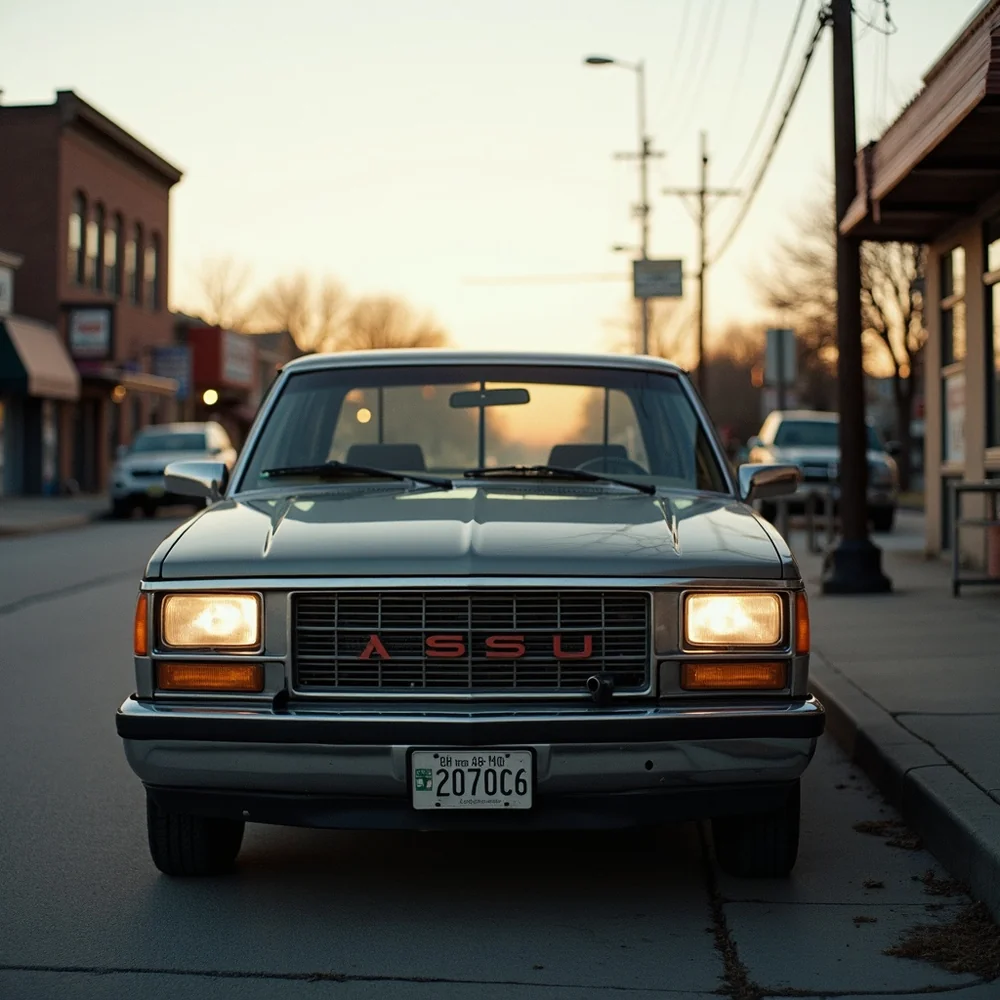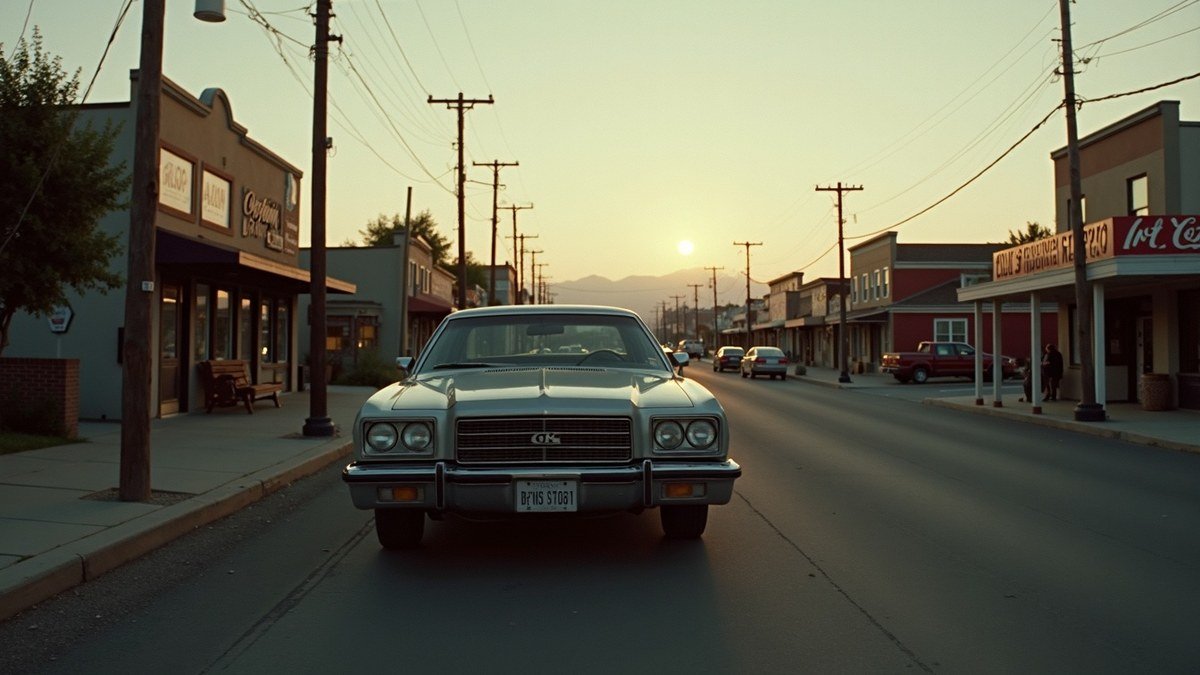
He slept in a 2003 Honda Civic in the same Walmart parking lot for fourteen months. He built his first website on the dashboard.
The Walmart on Kietzke Lane in Reno is open twenty-four hours a day. The parking lot is the size of three football fields. It sits at the corner of a long flat industrial stretch between the airport and the railroad tracks, in a part of town where the streetlights stay yellow well into the morning and the wind off the high desert can cut a man in half in February. The lot is, by long-standing American convention, one of the small handful of places in the country where you are allowed to sleep in your car overnight without somebody knocking on the window.
Daniel Park learned this in August of his thirty-first year. He had just finished a slow eighteen-month financial unraveling that had started with a botched restaurant investment in Sacramento and ended, by mid-July, with the eviction notice that he had been ignoring for six weeks finally taking effect. He had loaded what he could fit into the trunk and the back seat of a 2003 Honda Civic that he had bought used in 2014, and he had driven east, toward Reno, because he had a cousin there who had offered him a couch for two weeks, and because two weeks was the longest unit of time Daniel could think about that was not terrifying.
The couch in Reno lasted nineteen days. The cousin was kind. The cousin’s wife, who had not been consulted before the offer was made, was less kind. On the morning of the twentieth day, Daniel packed his three garbage bags of clothes back into the Civic, thanked his cousin, drove to the Walmart on Kietzke Lane, and parked at the far back corner of the lot.
He sat in the driver’s seat for almost two hours before he turned off the engine. He did not, that first morning, fully understand that he was about to live in his car for fourteen months. He thought he was sitting in a parking lot for an afternoon.
II. The shape of a day.
He had eight hundred and forty-one dollars in his checking account. He had no credit card debt because his credit had already been destroyed. He had his phone, which was paid up for two more months on a prepaid plan. He had a 2014 MacBook Air that he had bought when his restaurant had still been a going concern, and which he had refused, even at the worst of the eviction, to sell. He had three garbage bags of clothes, a duffel of papers, and a coffee mug that had belonged to his grandmother that he could not, even now, throw away.
He did not have a job. He had a degree in marketing from a state school in California, which he had finished in 2014, and which had landed him three years of mid-level work at a tech company in Sacramento before he had left to open the restaurant. He had eight years of restaurant marketing experience and a working knowledge of Squarespace, Shopify, and the particular dark art of writing menu descriptions that get people to order the second-cheapest wine.
The first week of any quiet life-bottom is not, in the end, about money. It is about what time the day starts.
The first day, Daniel woke up at five forty-five in the morning because the Walmart truck deliveries began at six and the diesel engines of the eighteen-wheelers were loud enough to vibrate the Civic’s windows. The second day, he woke up at five forty-five for the same reason. By the end of the first week, he had stopped trying to sleep past six. He had also developed, more out of necessity than discipline, the shape of a day.
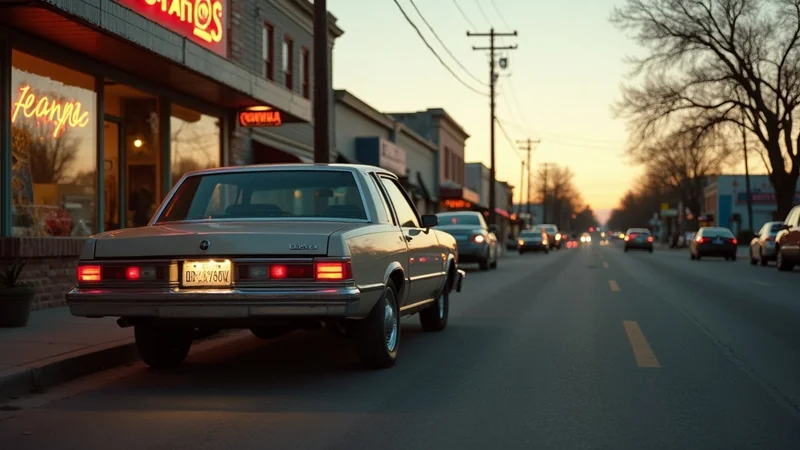
The day went like this. Wake at six. Brush teeth in the Walmart bathroom. Buy a granola bar and a black coffee from the McDonald’s two blocks away, which cost a dollar eighty-five total and which served as both breakfast and the rent on a chair with a power outlet. Sit in the McDonald’s until ten. Walk to the public library, which opened at ten, and which had free Wi-Fi that did not throttle. Sit in the library until five. Drive back to the Walmart. Buy a small bag of groceries that did not require refrigeration. Eat in the car. Read or work until ten. Sleep until six.
He kept this shape for fourteen months. He did not deviate from it more than four or five times in the entire run.
III. The first website.
He built it on the dashboard of the Civic, on the second Sunday of his new life, because the library was closed on Sundays and he did not want to think about it for a full day. He propped the MacBook on the steering wheel. He tethered the laptop to his phone. He used the last of his month’s data allowance to buy a domain, parkmarketingcraft.com, eight dollars and ninety-nine cents, and to subscribe, for the first thirty days free, to a basic Squarespace account.
He did not, that Sunday, have a business. He had a website. The two are not the same thing. The website had three pages. The first page said, in plain black serif type on a white background:
Daniel Park. Small-business marketing, done quietly and well. Restaurants, retail, professional services. Reno and the broader Western United States.
The second page listed his actual experience, with three small case studies from his old tech company and one from the restaurant, lightly anonymized.
The third page had a contact form.
He published the website at four in the afternoon on a Sunday in early September. He sat in the front seat of the Civic with the laptop balanced on his thighs and the dashboard warm from the sun, and he refreshed the live URL twice, the way a person does when they have just done a small concrete thing in the middle of a life that has otherwise stopped being concrete.
He did not get any inquiries for nine days.
IV. The first inquiry.
The first inquiry came from a woman named Patty Kowalski, who owned a small pet supply store in Sparks. Her son, who was twenty-six and lived in Portland, had told her she needed an internet person, and she had Googled small business marketing Reno, and Daniel’s site had been the third result, mostly because there were not very many other people in Reno specifically marketing themselves as small-business marketers. She had filled out his contact form on a Tuesday morning, and he had read the inquiry in the Reno public library on Tuesday afternoon at one-fifteen.
He had walked, with deliberate slowness, to the men’s room. He had washed his face. He had checked himself in the mirror for the long awkward fifteen seconds that you check yourself when you have not, technically, slept indoors in three weeks. He had walked back to his table. He had drafted a careful reply. He had revised it twice. He had sent it.
Patty wanted to know if he could help her set up a Shopify store, write some product descriptions for a line of artisan small-batch dog treats that she had been making in her basement for six years, and write a small monthly email newsletter to her existing customer list of about eleven hundred people.
He told her he could. He quoted her, after thirty minutes of careful internal arithmetic, one thousand four hundred dollars. He had not, in all of his career, charged a customer one thousand four hundred dollars directly. He had been on staff. He had received a salary. The quote felt enormous and impossibly small at the same time.
Patty wrote back on Wednesday. She said yes.
V. The first six months.
Patty paid him fifty percent on Friday, which was seven hundred dollars in his checking account at four in the afternoon. He did not, that night, do anything to celebrate. He did not buy a beer. He did not buy a hotel room. He bought, instead, a small folding camp chair from the same Walmart in whose parking lot he had been living for six weeks, and he set it up on the small patch of asphalt beside his car, and he sat in it for an hour, and he watched the sun go down over the warehouses across Kietzke Lane.
He delivered Patty’s project on time. The Shopify store launched in October. The product descriptions were, he later told me, the best small piece of writing he had done since his college thesis. The monthly newsletter went out on the first Tuesday of November. By the end of November, Patty’s online dog treat sales had quintupled. By the end of December, she had referred him to three other small-business owners she knew through her regional retailers' association.
The next six months were the slow careful version of the same loop. Walk into the library at ten. Work until five. Send proposals to small business owners in Reno, in Sparks, in Carson City. Quote at the lower end of what the market would bear. Deliver everything early. Reinvest every dollar that did not go to gasoline, McDonald’s coffee, or the prepaid phone plan into the next thirty days of the same loop.
He did not, in those six months, sign a lease. He could have. By month four, he had enough in his account to make a deposit on a studio apartment in the Old Southwest. He did not. He had developed a small superstition about the Civic, not a real superstition, just a quiet sense that the routine of the parking lot was the structure that was keeping the rest of the work standing, and that he was not yet ready to swap it out for a structure he did not know.
He showered at the Reno YMCA, where a monthly membership cost twenty-eight dollars. He did his laundry on Sundays at a coin laundromat on Mill Street where, after his third visit, the owner had begun greeting him by name. He had grown, in some quiet biological way, a kind of low-grade competence at being a person without a fixed address. He did not, he told me later, recommend this kind of competence to anyone. But he also did not regret having developed it.
The downtown branch of the Washoe County Library System deserves its own sentence in this story. It is a concrete building from 1966 with an interior atrium of live trees, ficus and dracaena rising thirty feet under the skylights, and Daniel worked at the same northeast table on the second floor for so many months that the reference librarians began, without any formal arrangement, holding it for him. One of them, a woman named Carol who had worked the desk since the nineties, kept a power strip behind the counter because the outlets near his table were unreliable. She never asked what he was building. He never explained. The library asked for a card and a quiet voice, and in exchange it gave him heat in January, air conditioning in July, fast internet, and nine hours a day of the one thing a man living in a Civic cannot buy at any price, which is a place where his presence required no justification.
Years later, when the company made its first charitable contribution, it went to the Washoe County Library Foundation. The check was signed before the lease on the office was.
VI. The fourteenth month.
He moved out of the Civic on the fifth of November of the following year. He moved into a one-bedroom apartment in the Midtown district of Reno, on the second floor of a brick building that had been built in 1928 and had been a furrier’s shop for the first fifty of those years. The rent was one thousand one hundred and twenty dollars. His business, by then, had passed eighty-four thousand dollars in annual revenue, which sounded modest but was the largest sum of money he had ever, in his life, made by himself in twelve months.
He kept the Civic. He still drives it. It now has just under two hundred and forty thousand miles on it, and it makes a small grumbling sound at idle that the mechanic has been telling him to ignore for three years.
The business, Park Marketing Craft, is now in its seventh year. It employs four people in addition to Daniel. The other three are based, respectively, in Reno, in Spokane, and in Boise. Annual revenue last year, Daniel told me carefully and with a faintly embarrassed expression, was just under one and a half million dollars. He owns the practice outright. He has no investors. He has, by the standards of the small American business he wrote into his original Squarespace homepage, become genuinely large.
He still serves Patty Kowalski’s pet supply store in Sparks. He has not raised her rate since the second year. He has, on three separate occasions, refused to take on competing work for other Sparks-area pet retailers, even when the rates offered were considerably better than Patty’s. He has, he told me, a small private rule about this. The rule is that the first person who gave you the first thousand four hundred dollars is the person whose business you do not, in any circumstance, undercut.
The Civic, for the record, is still registered. It sits under a cover in the parking lot behind the California Avenue office, and twice a year Daniel starts it, lets it idle until the temperature needle settles, and turns it off again. The odometer reads two hundred and nine thousand miles. One of the newer employees once asked, carefully, why the boss kept a twenty-year-old sedan he never drove. The office manager, who has been there longest, answered before Daniel could. “That’s not a car,” she said. “That’s the first office.”
VII. What he did not buy.
I asked Daniel, the morning I interviewed him in his small Midtown office above what is now a vintage record store, what the first thing was that he bought for himself, after he moved out of the Civic. He thought about it for a long time.
“A bed,” he said, finally. “A real bed. With a frame, and a mattress, and a box spring. Not a futon. Not a couch. A bed.”
I asked him what the second thing was.
“A coat rack,” he said.
He saw the look on my face. He laughed.
“You have to understand,” he said. “When you have lived in a car for fourteen months, the thing you start to dream about is hanging a coat on a hook. Not a chair. Not a doorknob. A hook. The hook in your own wall in your own apartment. I dreamed about that for almost the entire winter of the second year. The coat rack was the first thing I bought after the bed.”
He looked at the wall of his small office, where there is still a coat rack, a long four-hook walnut one, mounted at chest height, and on the morning I sat with him there were two coats on it, both his.
The company today employs nine people, six of them remote, and runs out of four rooms above a title office on California Avenue. There is no sign on the street. The million-dollar year arrived quietly, in the company’s fourth fiscal year, and Daniel marked it by taking the nine employees and Carol from the library to dinner at a steakhouse on the river, where he gave a toast that lasted, by the count of the people who were there, eleven seconds. The framed object on the office wall is not the first dollar. It is a photocopy of a Washoe County library card.
VIII. Why it stays.
I have been writing for The Chapbook for almost nine years, and the stories of Americans who have built businesses out of impossible places do not, in my experience, tend to follow the shape that magazines like to give them. They are not stories of bold pivots and audacious decisions. They are stories of one person who developed, mostly by accident, the discipline of waking up at six and walking to a McDonald’s and ordering the cheapest coffee on the menu, and who kept doing it for fourteen months without telling anyone how thin a margin he was on.
Daniel Park did not, in his fourteen months in the Civic, have a single dramatic moment. He had no eureka. He had no rock-bottom motivational speech. He had a Walmart parking lot, a 2014 MacBook, and a daily shape that he refused to break. He had the small private dignity of refusing to look, in the McDonald’s mirror, like a man who was sleeping in his car, and over time, that small private dignity became the actual thing he had to offer the small businesses of the western United States, which was that he showed up early, did the work carefully, and made invoices that always added up.
Across the United States, there are tens of thousands of people in roughly Daniel’s situation, building something quiet out of a folding camp chair beside a Honda Civic in the back of a parking lot somewhere. Most of them will not, in any obvious sense, succeed. A small number of them will. For broader context on the long economics of American small business, readers can spend time with the careful reporting at PBS NewsHour or the public information from the U.S. Small Business Administration. The Chapbook keeps its narratives clean, human, and responsible, read more in the Editorial Policy.
The coat rack is still on the wall of Daniel’s office. He has, on his desk, the same grandmother’s coffee mug he carried out of the Sacramento apartment in 2018. The Civic is parked, the morning I interviewed him, in the small lot behind the building.
He gets out of bed, every morning, at six.